
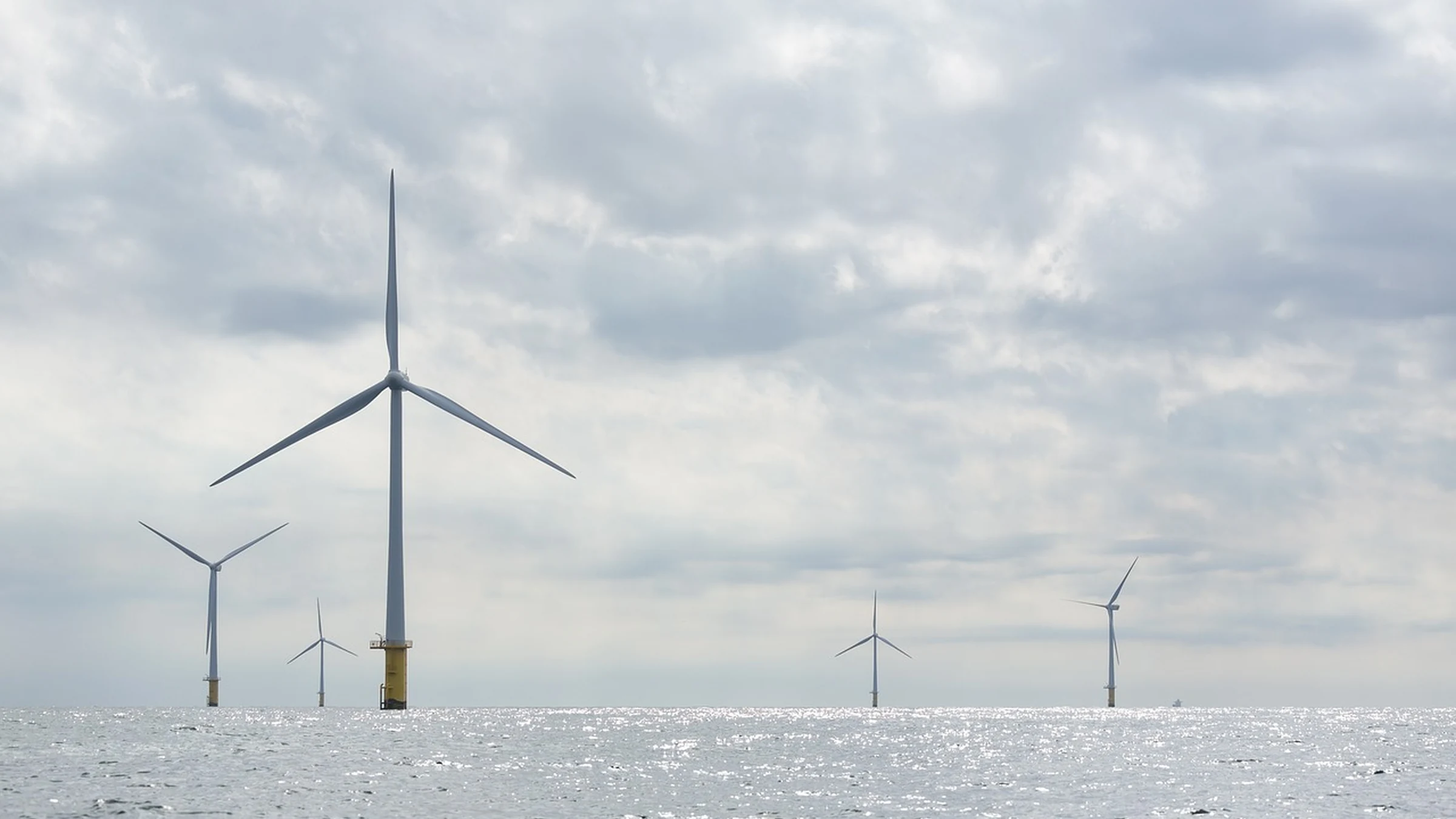
The Netherlands ordered operators at designated offshore wind sites to slow their turbines for five hours on November 19. A forecast of heavy bird migration triggered the order under rules that also account for grid security and the uncertainty of predicting flight.
On November 19, the Netherlands required operators at specified offshore wind sites in the North Sea to reduce turbine rotation below two revolutions per minute between 6 p.m. and 11 p.m. Central European Time. The minister acted on a forecast of mass migration over the sea. For an operator, the notice reported a physical limit and the hours when it applied. The permit framework behind that notice shows how a forecast becomes a coordinated instruction across places where the birds and the power system both cross boundaries.
Why the Old Trigger Missed Migration Peaks
Earlier permit conditions used a fixed trigger of 500 birds per kilometer per hour. The government’s permit amendment says the threshold was high enough that it produced no enforceable curtailment decisions even when radar registered peaks in movements. Operators at a majority of Dutch North Sea wind farms had voluntarily slowed turbines in response to advice informed by a lower threshold. That experience mattered because the birds pass across several lease areas. Protecting them on one site can leave them exposed at the next. The new permit terms give the minister a common mechanism to apply an instruction to the sites named in the notice.
The Forecast Has a Specific Job
A government-managed or commissioned model now signals when mass migration is expected. It accounts for factors including wind speed and direction near departure points, temperature, rainfall and the seasonal timing of relevant species. Each can shift when birds depart and how they travel. A ministerial decision establishes the hours to which the limit applies. The minister can consult bird specialists when interpreting the signal, including when a forecast may be a false alarm. Operators have a defined instruction even though the model itself has to cope with weather and seasonal variability.
Time for the Grid to Adjust
The same instruction can reduce output at several sites at once. That matters to the grid operator because power generation and consumption have to stay balanced, and other sources may need to respond. The permit amendment describes consulting the national grid operator before a decision to assess risks to grid security. It also calls for announcing the instruction in time for permit holders to act. Lead time lets the network operator and electricity market participants plan around a period of reduced output. Waiting for the peak to be observed would reduce that time, even if the number of birds could then be estimated more confidently.
The Permits Bound the Hours
The permit terms define night and seasonal windows for the procedure and cap the annual hours of curtailment at 60. November’s five-hour instruction fits within the autumn season. The gazette also recorded orders covering multiple windows across October 30 and 31, showing that the procedure can specify separate intervals when forecasts point to different peaks. A cap gives operators a boundary on the amount of time that can be ordered and makes timing especially important. Hours set aside when few birds cross provide less protection than hours that coincide with concentrated migration. For the sites covered by the amendment, autumn runs from August 15 to November 30 and spring from February 15 to May 31. The rule defines night as 6 p.m. to 6 a.m. Central European Time. Defining the outer window in the permits means that a notice can focus on the narrower period of a particular forecast. The season and hour limits constrain an intervention whose cost to electricity production depends on the wind during the selected hours and on which wind farms are in scope.
A Notice Shows When the Rule Was Used
The November publication shows where and when the rotation limit applied. Interpreting its effect would require other observations. Recorded turbine speeds can test whether instructions reached the machinery, and radar can show whether the predicted movement occurred during the same hours. Collision evidence is a further measure with its own collection challenges offshore. Changes in wind after an order can move bird movements away from the chosen window and can also change the amount of generation that would otherwise have been available. Reading those records together would tell managers where the next improvement belongs, whether in forecasting, decision timing or delivery of the instruction. The permit record notes that the strongest migration peaks in the data it reviewed tended to occur at relatively low wind speeds. That relationship helps explain why a rotation limit of a given duration need not imply the same loss of generation every time. The amount of generation at stake also varies with the capacity of the sites covered. A tally of hours alone leaves out both differences.
Take-Out
The Dutch approach makes a bird forecast operational by pairing enforceable turbine limits with advance grid coordination. Its conservation value depends on how closely the ordered hours match actual migration.
Questions and answers
What readers should know
- What speed did the November 19 order specify?
- Less than two revolutions per minute.
- When did it apply?
- From 6 p.m. to 11 p.m. Central European Time on November 19, 2026.
- Which turbines were covered?
- Turbines at offshore sites identified by the wind-lease decisions listed in the notice.
- Who turns a forecast into an order?
- The minister sets the curtailment window through a decision under the permit framework.
- Why is the grid operator consulted?
- Simultaneous cuts in offshore generation can affect balancing, congestion and security of supply.
Stay in the loop
Keep Mark and Focus in view
Hear about future publications, announcements, and relevant updates from Mark and Focus.