
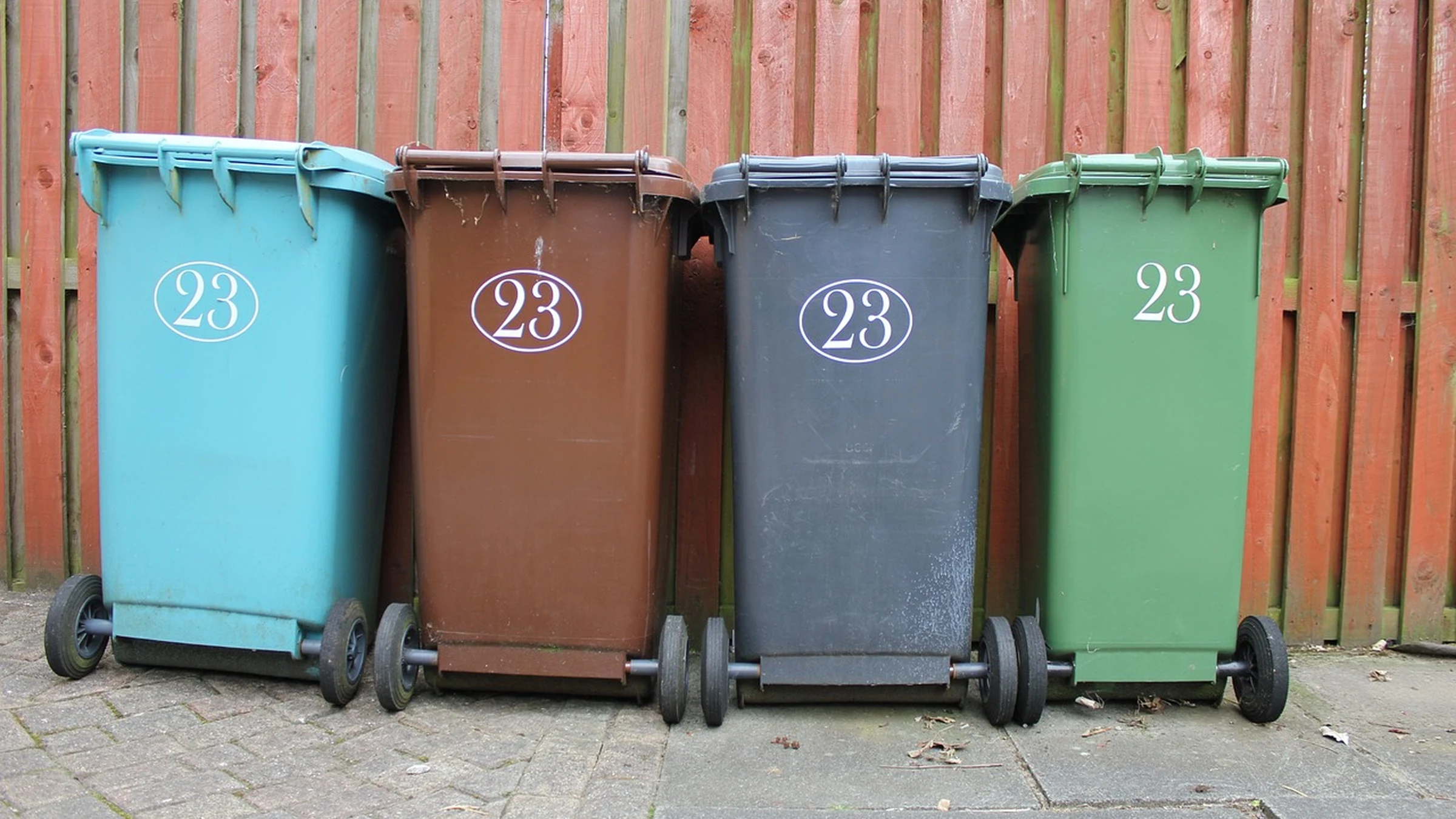
Scotland’s draft household recycling code links cleaner material streams with more consistent services and limits on residual waste capacity. Its consultation also asks how councils should accommodate homes where a standard collection model cannot work.
Scotland’s proposed recycling rules reach beyond the question of which bin a household should use. The consultation opened on October 29, 2026 examines how the collection service itself shapes sorting: what materials residents can separate, how much general waste the service accepts and when a different arrangement is justified. Responses close on January 21, 2027.
Separate paper before it loses quality
The draft promotes greater use of twin-stream collections, keeping paper and card apart from plastic, metal and cartons. The practical objective is cleaner material, rather than separation for its own sake. A collection can capture a large quantity while leaving some of it poorly suited to recycling because different materials have become mixed or contaminated.
Consistent definitions of accepted materials address another part of that problem. Residents need instructions that correspond to the service actually available. Changing a label without changing collection and treatment arrangements would leave the disposal decision unresolved. The proposal therefore combines the physical arrangement of collections with clearer communication and nationally recommended bin colors.
For councils, this creates a delivery question. Separate streams require a workable way to collect and handle them. A household instruction is credible only where the following collection route preserves the separation it requests. That is why material quality and service design belong in the same discussion.
Measure capacity across the collection cycle
For kerbside households with their own bin, the draft proposes a maximum effective residual capacity of 60 liters per week. It does not prescribe one bin size or collection frequency. A 120-liter bin collected fortnightly and a 240-liter bin collected every four weeks provide the same average weekly allowance, although residents experience the schedules differently.
This approach would let councils change frequency while retaining functional bins. It also makes comparisons clearer: the size of a container alone says little about the amount a service accepts over time. The consultation asks whether the ceiling should instead be 70 or 80 liters, so the proposed figure should not be presented as an adopted national limit.
Reducing residual capacity is intended to encourage greater use of recycling and food-waste collections. The policy relies on those alternative routes being available. The draft excludes households without food-waste collection and properties using shared bins from the proposed maximum, and calls for exemptions where unavoidable waste arises from circumstances such as family size or medical needs.
Keep equivalent outcomes within reach
A national service expectation meets different property layouts, storage constraints and collection conditions. The draft supports assessing whether its approach is technically, economically and environmentally practicable. Where councils cannot reasonably provide the standard model, they are encouraged to consider alternatives delivering equivalent recycling outcomes.
That qualification preserves the purpose of consistency without assuming identical containers will suit every address. Where space prevents twin-stream containers, for example, the draft asks councils to consider whether sorting after collection could achieve equivalent quantity and quality. The comparison concerns the recovered material as well as the convenience of the collection arrangement.
The consultation has not established that these changes have already improved Scotland’s national recycling performance. It sets out a proposed service and the reasoning behind it. Its strongest implementation question is whether each household can move from a clear instruction to an accessible collection and then to material that can actually be recycled.
Take-Out
Residual capacity is a service-design choice: households need credible recycling routes and workable exceptions before a smaller general-waste allowance can improve material recovery.
Questions and answers
What readers should know
- Has Scotland adopted these limits?
- No. The code is under consultation, with responses due January 21, 2027.
- What does twin-stream collection separate?
- Paper and card are collected separately from plastic, metal and cartons.
- Does 60 liters mean weekly collection?
- No. It is an effective weekly capacity, achievable through different bin sizes and schedules.
- Which households need different treatment?
- The proposed maximum excludes shared bins and homes without food-waste collection, with further individual exemptions.
- What should alternatives achieve?
- The draft asks councils to consider equivalent recycling outcomes, including material quantity and quality.
Stay in the loop
Keep Mark and Focus in view
Hear about future publications, announcements, and relevant updates from Mark and Focus.