
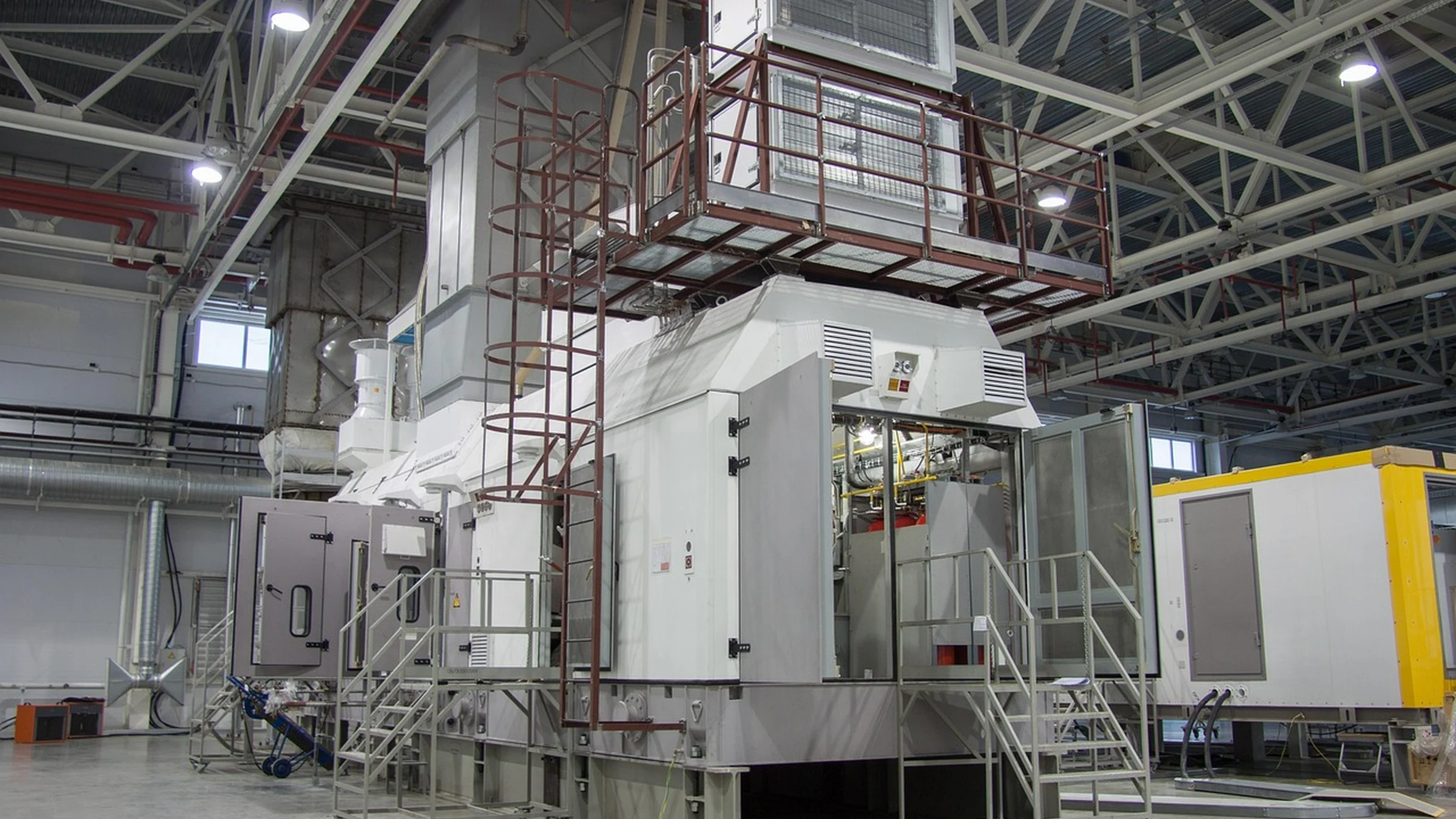
Côte d’Ivoire formally inaugurated the Atinkou power plant at Taboth on November 6. Its gas turbine connected to the grid in 2023, and the plant entered combined-cycle commercial operation in December 2025.
When Côte d’Ivoire formally inaugurated the Atinkou power station on November 6, the project had already passed through two operating milestones. The gas turbine connected to the grid in 2023. Commercial operation in combined cycle began on December 13, 2025, according to the energy ministry’s account of the inauguration. The gap between those dates shows how a plant designed to use gas and steam can begin supplying power before the equipment for recovering heat is ready.
How the Second Turbine Uses the First
A gas turbine burns fuel and uses the expanding hot gases to turn the turbine that drives a generator. In a plant built to run only in that mode, substantial heat remains in the exhaust. A combined-cycle plant routes the hot exhaust through a heat-recovery boiler. The boiler makes steam, which turns a second turbine. Once the steam system is in service, both turbines generate electricity from the fuel burned in the first stage.
For Côte d’Ivoire, that changes what a given quantity of gas can supply. The energy ministry says the arrangement can produce about 50 percent more electricity from the same amount of gas compared with the gas stage alone. The comparison concerns the plant’s design. Output and fuel use during normal operation will vary with factors such as the load the grid asks the plant to carry, equipment availability and site conditions. Because the plant still burns gas, the carbon implications depend on both its fuel efficiency and how often it runs.
Why the Connection Came Before the Full Cycle
Eranove, the project’s developer, reports that the gas turbine was connected to the grid in 2023. Its subsequent reporting tracks work on the combined-cycle stage. Electricity that reached the grid during this sequence came from equipment able to generate before the heat-recovery and steam stage completed commercial commissioning. This gave the project two different points at which it could contribute to supply.
Staged commissioning also creates two different records for anyone assessing delivery. A grid connection confirms the gas turbine can export power. The start of combined-cycle commercial operation marks the point at which the plant can supply power using both stages as an operating unit. Reporting those dates separately helps explain why the November inauguration took place after electricity was already being delivered.
Selling Power Requires a Way to Move It
The International Finance Corporation’s project disclosure sets out a 20-year build, own, operate and transfer concession. A project company takes responsibility for delivery and operation over the concession period. That spans decisions that are often separated, including how equipment will be maintained after it has passed commissioning tests and how outages will be managed under the project’s operating obligations.
Electricity still needs a route to the rest of the supply system. The energy ministry describes Atinkou’s connection through a 400-kilovolt substation and the high-voltage line built by CI-Énergies around Abidjan. The link is what makes electricity generated at Taboth available to the network. The generation and transmission assets therefore have different delivery records but serve the same customer demand. Reviewing the plant by itself would miss the line through which its output can reach users elsewhere.
What the Operating Figures Can Show
The ministry reports that Atinkou injected 1,934 gigawatt-hours into the grid in 2025, above its contractual figure of 1,880 gigawatt-hours. It gives potential annual production of up to 2,875 gigawatt-hours. The 2025 figure is a record of electricity delivered across the year, almost all of which preceded the formal start of combined-cycle commercial operation in December. The higher figure describes what the ministry says the completed plant could produce in a year. Comparing the two as if they were from consecutive years of full operation would give the wrong impression about what was measured.
IFC’s disclosure also identifies air emissions, water use and discharges among the matters to manage during operation. The added steam stage improves the amount of electricity that can be produced from the exhaust heat and introduces equipment that has its own maintenance and operating requirements. The most informative next comparison would pair a full year of electricity delivered with fuel use, availability and the environmental monitoring that accompanies that output. That would put the expected efficiency gain in the same operating record as the costs of sustaining it.
Take-Out
Atinkou’s second stage uses heat from the first to supply more electricity from a given amount of gas. The performance record to watch is generation and fuel use across a full year in combined-cycle service.
Questions and answers
What readers should know
- Where is the plant?
- It is at Taboth in the Jacqueville department of Côte d’Ivoire.
- How much generating capacity does Atinkou have?
- The energy ministry describes a plant of more than 390 megawatts.
- When did the combined cycle begin commercial service?
- The ministry gives December 13, 2025. The official inauguration followed on November 6, 2026.
- How does the steam turbine produce power?
- Heat in the gas turbine exhaust makes steam, which drives the second turbine.
- What does the 2025 delivery figure represent?
- The ministry reports 1,934 gigawatt-hours injected into the grid in 2025, a year that largely preceded combined-cycle commercial operation.
Stay in the loop
Keep Mark and Focus in view
Hear about future publications, announcements, and relevant updates from Mark and Focus.