
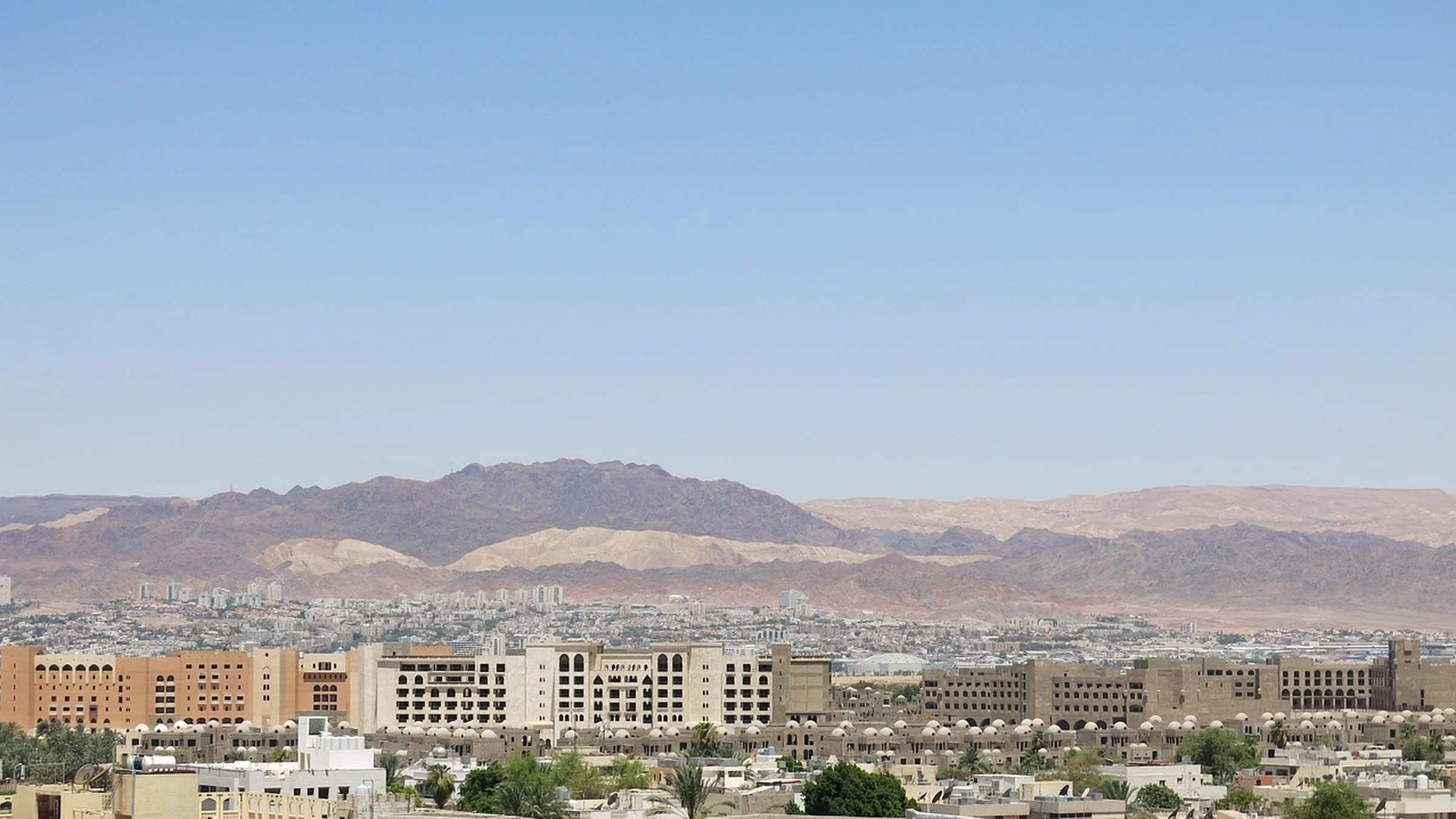
Jordan has broken ground on its Aqaba–Amman water carrier. The project will connect a seawater desalination plant to inland reservoirs, with pumping, electricity and long-term operations determining how much drinking water reaches the network.
Jordan broke ground on the Aqaba–Amman water carrier on November 18. The following day the government signed a $6.6 billion agreement with lead developer Meridiam to launch executive works. The two milestones shift attention to a practical question. How does water produced at the Red Sea become a reliable supply for communities far inland and well above the coast?
The Delivery Target Starts at the Reservoirs
The project is designed to produce 300 million cubic meters of drinking water a year. The Asian Infrastructure Investment Bank’s project summary assigns 250 million cubic meters to Amman and 50 million to Aqaba. The design puts most of the volume at the inland end of the system, where two existing reservoirs are expected to receive it. A production total measured at the plant would tell operators only part of what they need to know.
Reverse osmosis gives the project a new source of freshwater. Pressure forces water through membranes that retain most dissolved salts. The finished water can enter the conveyance network after treatment, while the process leaves a concentrated stream that the plant must return safely to the sea. Conditions at the intake can affect plant availability just as conditions in the receiving network affect how much finished water operators can deliver.
Pumping Sets the Inland Schedule
The government’s latest account puts the main pipeline at 417 kilometers and describes lifts to about 1,100 meters above sea level. The developer quotes 418 kilometers for its pipeline network. Earlier financing documents describe 438 kilometers of underground conveyance. Those figures come from different documents and project definitions. The practical point is the same across them. Most of the rated output needs a long chain of pumping and conveyance before it becomes available inland.
The pumps must overcome the gain in elevation as well as friction in the pipe. Storage at the receiving end can absorb short differences between arrival and local demand. During a prolonged interruption, however, storage buys only as much time as its operating reserve allows. Testing should therefore follow water all the way from production through delivery, including interruptions and a controlled return to service. A plant test on its own cannot establish how much water the capital can count on.
Solar Power Covers Part of the Work
The November government account describes 300 megawatts of solar generation and estimates that it will supply around 30 percent of the project’s electricity needs. The percentage describes an expected contribution to electricity consumption. Pumping and membrane treatment also need power during hours when the solar facilities produce little or nothing. How operators schedule pumping, draw on the remaining power supply and use available storage will determine how the solar contribution translates into operating costs and service reliability.
Power also links decisions at opposite ends of the system. Rescheduling pumping to take advantage of daytime generation would change when water arrives at the reservoirs. The scope for doing so depends on how much water the plant can hold before transfer and how much the receiving reservoirs can supply between deliveries. Those are operating decisions that can be tested once the individual components are ready.
The Concession Shares One Delivery Obligation
The consortium’s 30-year concession covers financing, design, construction, operations and maintenance for the plant, conveyance works and solar assets. That scope puts the main project interfaces within one concession. The public counterpart still has to manage the boundary with the distribution network. Reservoir levels and delivery schedules here matter because the addition of bulk water can improve household supply only if the downstream network can store, route and distribute it.
The signed agreement provides for executive works. Over time, the service evidence will be the volume and quality of water arriving at each delivery point, its performance during interruptions and the operating resources needed to maintain that service. Those measures link the project’s capacity to something a downstream utility can plan around.
Safeguards Follow the Whole Route
The marine intake and discharge create operating responsibilities at the Gulf of Aqaba. The project’s lender assessment identifies potential risks to coral and marine habitats from construction and from brine discharge during operations. The inland alignment brings land and habitat concerns, including proximity to the northern part of the Wadi Rum protected area. Construction monitoring and operating measurements address different stages of exposure.
The same delivery logic applies to safeguards. Changing intake or discharge conditions can restrict how the plant operates, just as access and land arrangements can affect progress along the pipe corridor. Reliable service depends on resolving those issues before the system is called on to meet its design volume. The next meaningful milestones will show which links can operate together at the promised scale and under the conditions the concession will actually face.
Take-Out
The carrier’s capacity will be measured at its delivery points. Reliable output requires the desalination plant, pumps, power supply and receiving reservoirs to work together under ordinary and disrupted conditions.
Questions and answers
What readers should know
- What started in November?
- Jordan held the groundbreaking on November 18 and signed an agreement to launch executive works the next day.
- How much water is the carrier designed to produce?
- The project targets 300 million cubic meters of drinking water a year. Its lender disclosure allocates 250 million to Amman and 50 million to Aqaba.
- Why is pumping a major part of the project?
- Most of the water must travel hundreds of kilometers from the coast and gain more than a kilometer in elevation.
- How much electricity will solar provide?
- The government estimates the solar facilities will provide around 30 percent of the project’s electricity needs.
- What will show that the carrier is providing its intended service?
- Operating records at the delivery points will show water volumes, water quality and how steadily the system can deliver under varying conditions.
Stay in the loop
Keep Mark and Focus in view
Hear about future publications, announcements, and relevant updates from Mark and Focus.