
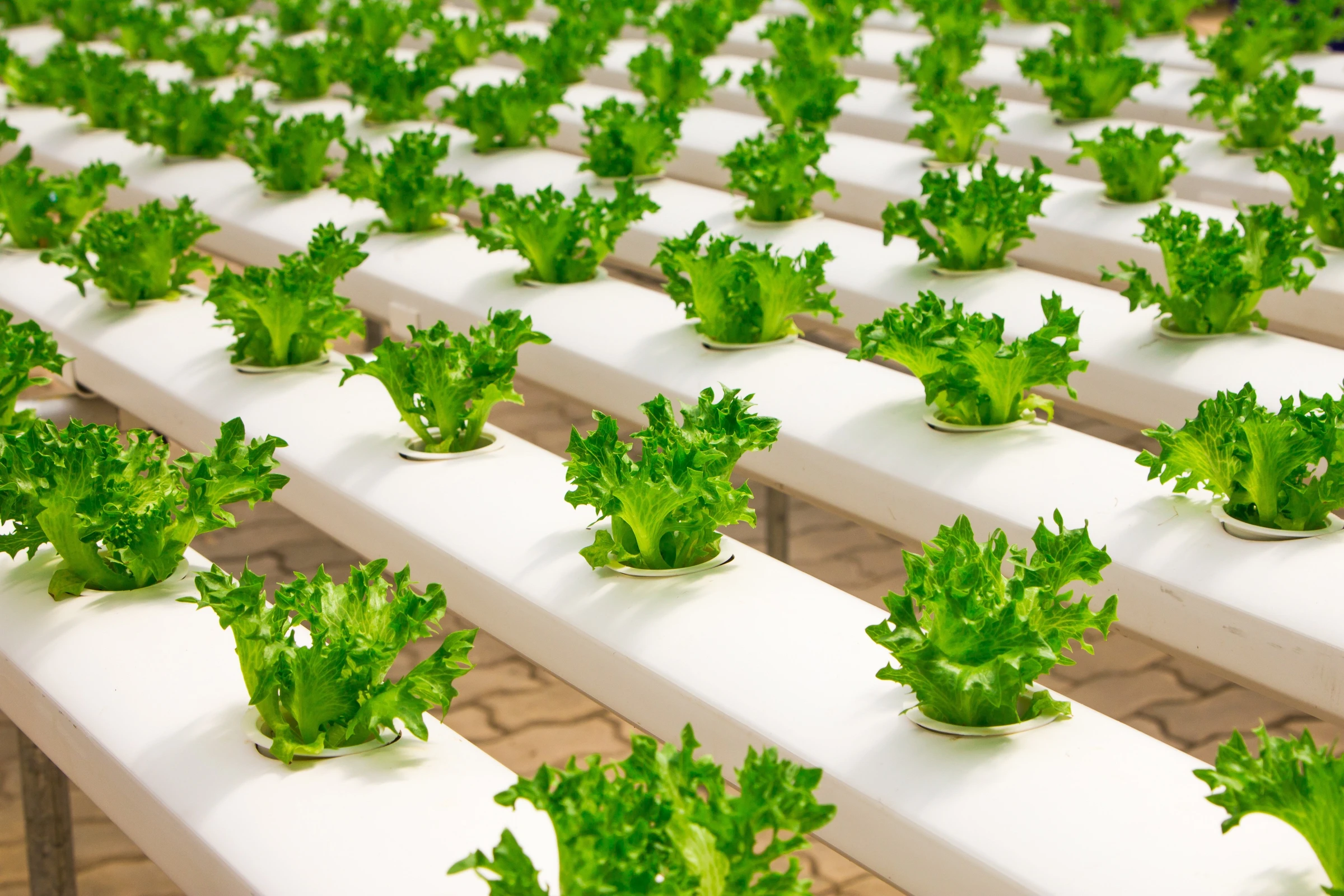
Controlled-environment farming can bring production into urban buildings, but water circulation, lighting, climate control and customer access must work together. Seoul’s Sangdo Metro Farm illustrates how cultivation can share space with transport, food and education.
Urban farms can bring food production into buildings and other spaces that conventional agriculture cannot use. Their value depends on matching crops and growing conditions to the city’s water, energy and operating constraints.
Managing the root zone changes the water balance
In hydroponic farming, roots receive water and dissolved nutrients without relying on agricultural soil. Collecting drainage and returning it to the growing system can reduce the amount of fresh water needed, but recirculation requires active management. Plants remove nutrients at different rates, while salts and pathogens can accumulate. Operators must monitor water quality, adjust the nutrient solution and clean equipment rather than simply keep the pump running.
Indoor production exchanges weather exposure for operating demands
Enclosing crops gives growers more control over temperature, humidity and light. Stacked growing areas can increase production space within a building, while artificial lighting makes cultivation possible away from windows. Those advantages bring an energy demand that outdoor farms largely avoid. Lighting, ventilation and moisture removal must work together: plants release water vapor, and an enclosed room needs to remove that moisture to maintain suitable conditions. Water efficiency alone therefore cannot establish the environmental performance of an indoor farm.
Choose crops and locations together
A compact urban farm needs a route from harvest to customer as well as suitable growing equipment. Leafy vegetables and young plants fit short production cycles and can be sold fresh, while the building must accommodate water supplies, drainage, safe access and maintenance. Locating production near consumers can shorten the journey after harvest, but dependable operation still depends on trained staff and reliable power. The right comparison includes output, water and electricity consumption, crop losses and the cost of reaching buyers.
Case Study: Sangdo Metro Farm brings cultivation into a Seoul station
Seoul Metropolitan Government and Seoul Metro worked with Farm8 to create a controlled-environment farming complex inside Sangdo Station on subway Line 7. The facility opened on September 27, 2019. It combined indoor vertical cultivation, an automated growing unit and a café using crops from the farm.
The 394-square-meter complex brought several functions into one station setting. Environmental controls managed light, temperature, humidity, carbon dioxide and nutrients for crop production. A separate container-style Auto Farm demonstrated robotic management from sowing through harvesting of young leaves. The café and educational spaces connected cultivation with eating and learning, making the growing process visible to people using the city’s transport network.
The project illustrates a practical distinction between creating more agricultural land and making existing urban space productive. Its station location connected growing facilities with public access and education; it did not remove the need to manage an enclosed farm’s equipment and energy demands. For other cities, the transferable lesson is to design the operating system, customer access and purpose together, rather than treating a vacant interior as sufficient justification for a farm.
Take-Out
Urban farming works best when crop choice, water management, energy demand and access to consumers are designed as one system.
Questions and answers
What readers should know
- Does recirculation eliminate water use?
- No. Plants consume water, and cleaning and nutrient management can require additional inputs.
- Does indoor farming automatically reduce environmental impacts?
- No. Electricity, equipment, crop performance and local conditions must be assessed alongside water consumption.
- What does Sangdo Metro Farm illustrate?
- It shows how indoor cultivation can share urban space with transport, a café and education, while still requiring deliberate management of growing conditions.
Stay in the loop
Keep Mark and Focus in view
Hear about future publications, announcements, and relevant updates from Mark and Focus.