
Mark and Focus analysis
How Thames Estuary 2100 Uses Monitoring to Time Flood Decisions
Read the analysis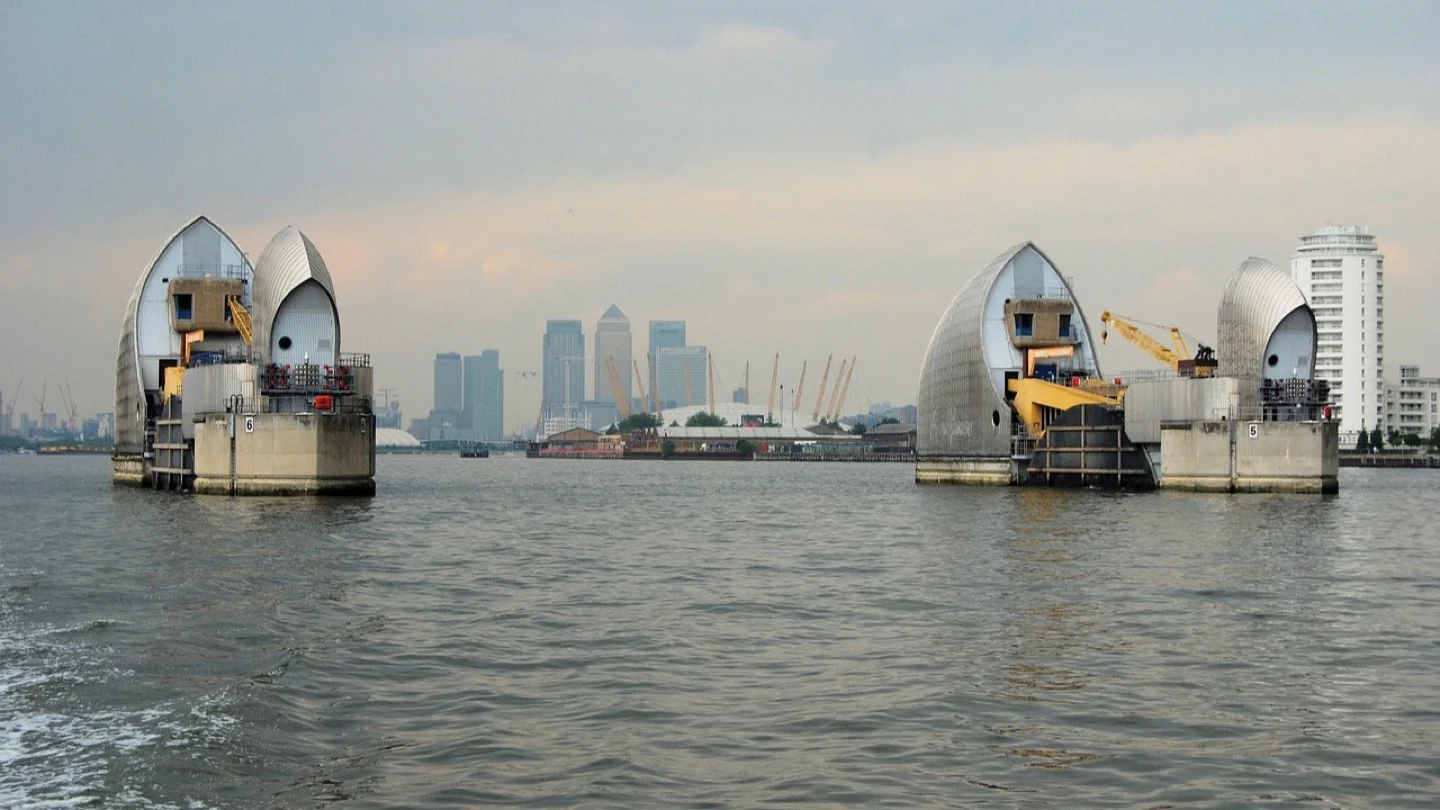
The Thames Estuary 2100 Plan uses monitored change to adjust the timing of long-term flood decisions across the tidal corridor from Teddington to Shoeburyness. Its 15-year review finds that current defenses perform well while accelerating sea-level rise requires further investment, improved forecasting and reassessment of future infrastructure needs. The plan’s effectiveness depends on acting before risk overtakes the time needed to prepare and deliver projects.
Existing flood defenses in the Thames Estuary perform well, but the underlying hazard is accelerating. The 15-year review of the Thames Estuary 2100 Plan supports an adaptive response: monitor changing conditions, reassess infrastructure needs and change the timing or form of recommendations when the evidence changes. Across 27 local council areas from Teddington to Shoeburyness, this approach is intended to keep forecasting, investment and infrastructure decisions aligned with conditions in the estuary.
Coordinating protection across the Thames Estuary
Thames Estuary 2100 manages tidal flood risk across a corridor in which local protection decisions are interdependent. Communities and assets share the same estuarine system, so a decision in one reach must be considered alongside water movement, downstream effects and the wider sequence of protection. Coordination is therefore part of the plan’s protective capacity. Poorly aligned schedules could shift exposure or leave a weak point between otherwise effective defenses.
The review found that existing defenses perform well and protect and benefit more people, property and activity than before. This performance gives institutions time to prepare for accelerating sea-level rise; it does not mean that future protection needs have already been met.
Preparation includes developing options, maintaining delivery capability and understanding how protection needs may change before an urgent decision becomes unavoidable. Investigation, financing and delivery all take time. If this work starts too late, urgency can narrow the available choices even when monitoring has correctly identified a change in risk.
Using monitoring to change the delivery pathway
The plan is adaptive rather than tied to an immutable construction schedule. Its monitoring program tracks indicators of change so recommendations can be advanced, delayed or altered when observed conditions depart from the original pathway. The timing of an intervention is therefore a governed decision, not an assumption that every intervention must occur on the date first anticipated.
A change to the pathway needs a clear connection to the observed signal, its consequences and the delivery time that remains. This allows affected areas to understand why a recommendation has moved, what the change requires and whether sufficient time remains to act. It also distinguishes a justified delay from a failure to decide.
The 15-year review is part of this operating mechanism. It tests whether the assumptions behind the long-term pathway still hold and whether institutional responsibilities remain adequate. Its call to reassess future infrastructure needs shows how monitoring can alter delivery rather than merely describe environmental conditions. Regular review also keeps flexibility from becoming indecision: waiting must remain defensible against current indicators, prepared alternatives and the time still needed for delivery.
Aligning institutions around shared signals
Local councils, national government and delivery bodies need a shared interpretation of the indicators and a common understanding of which thresholds should prompt further study, investment or infrastructure change. Without that framework, neighboring areas could plan for the same tidal system using incompatible assumptions about its future. Common triggers do not remove local judgment; they give local decisions a consistent language of risk.
Institutional responsibilities extend beyond interpreting the evidence. The organizations involved must keep infrastructure options under review, preserve the ability to deliver them and connect trigger decisions to financing and project development. Clear responsibility matters because a recommendation cannot be advanced successfully if the necessary preparation begins only after the relevant threshold has been crossed.
Connecting forecasting, investment and infrastructure
Accelerating sea-level rise increases the importance of long-term investment because flood-protection assets have substantial lead times. Renewal, reinforcement or new infrastructure must be prepared before existing defenses cease to provide their intended service. Investment needs to follow a risk pathway that neither treats current performance as permanent nor commits too early to a single forecast.
Developing options before a preferred scheme is required preserves room to respond if observed conditions move faster, slower or differently from the central pathway. Mature alternatives can then be considered without starting every stage of project development after a threshold has already been crossed.
Improved tidal forecasting supports immediate operational readiness and helps institutions judge whether conditions are approaching long-term thresholds. Forecasting updates the understanding of risk, while capital planning preserves the ability to act on that understanding. Dependable observations, tested models and clear communication are needed to translate technical uncertainty into near-term readiness and investment choices whose effects will extend over decades.
Preserving enough time to act
Decision lead time is the principal constraint. Monitoring may identify a change well before a project can be planned, approved, funded and built. Trigger points must leave enough time for investigation, consent, procurement and construction without prompting commitments unsupported by the observed pathway. Institutional and technical preparation use the delivery window just as physical work on a defense does.
The consequences of these decisions vary across the estuary because the people, property and activity behind each defense are not identical. Investment priorities need a system-wide frame and transparent local reasoning to remain credible across the corridor. That reasoning should explain how system integrity, local consequences and feasible sequencing interact rather than treating the highest visible asset value as the sole basis for action.
The review therefore holds two findings together: current defenses perform well, while accelerating sea-level rise requires more investment, improved forecasting and reassessment of future infrastructure. Present strength provides time to prepare, but it cannot substitute for preparation.
What successful adaptation should demonstrate
The most useful indicators connect environmental change to executable decisions. Sea-level observations and tidal forecasts should inform when infrastructure options are investigated, funded and delivered. Evidence of future performance should show both that defenses continue to provide their intended service and that trigger decisions preserve an adequate delivery window.
The plan can extend its protective role only while monitoring remains connected to investment, prepared options and clear institutional responsibility. The same principle applies elsewhere: adaptive planning is credible when observed change leads to funded, executable decisions early enough to preserve the time required to deliver them.
Take-Out
Adaptive flood planning works when monitored change prompts investment and infrastructure decisions early enough to preserve protection before risk overtakes the time available for delivery.
Questions and answers
What readers should know
- What is the coverage of the Thames Estuary 2100 Plan?
- It covers tidal flood risk across 27 local council areas from Teddington to Shoeburyness.
- What does the Thames Estuary 2100 Plan report about defense performance?
- The 15-year review concluded that existing flood defenses perform well.
- How does the Thames Estuary 2100 Plan respond to sea-level rise?
- The review says it requires increased long-term investment.
- What forecasting improvement does the Thames Estuary 2100 Plan require?
- Improved tidal forecasting is identified as a required response.
- How can adaptive monitoring alter the Thames Estuary 2100 Plan’s recommendations?
- Indicators allow recommendations to be advanced, delayed or altered when conditions differ from the plan.
Stay in the loop
Keep Mark and Focus in view
Hear about future publications, announcements, and relevant updates from Mark and Focus.