
Mark and Focus analysis
Paraná Treats Water Security as a Landscape Operating System
Read the analysis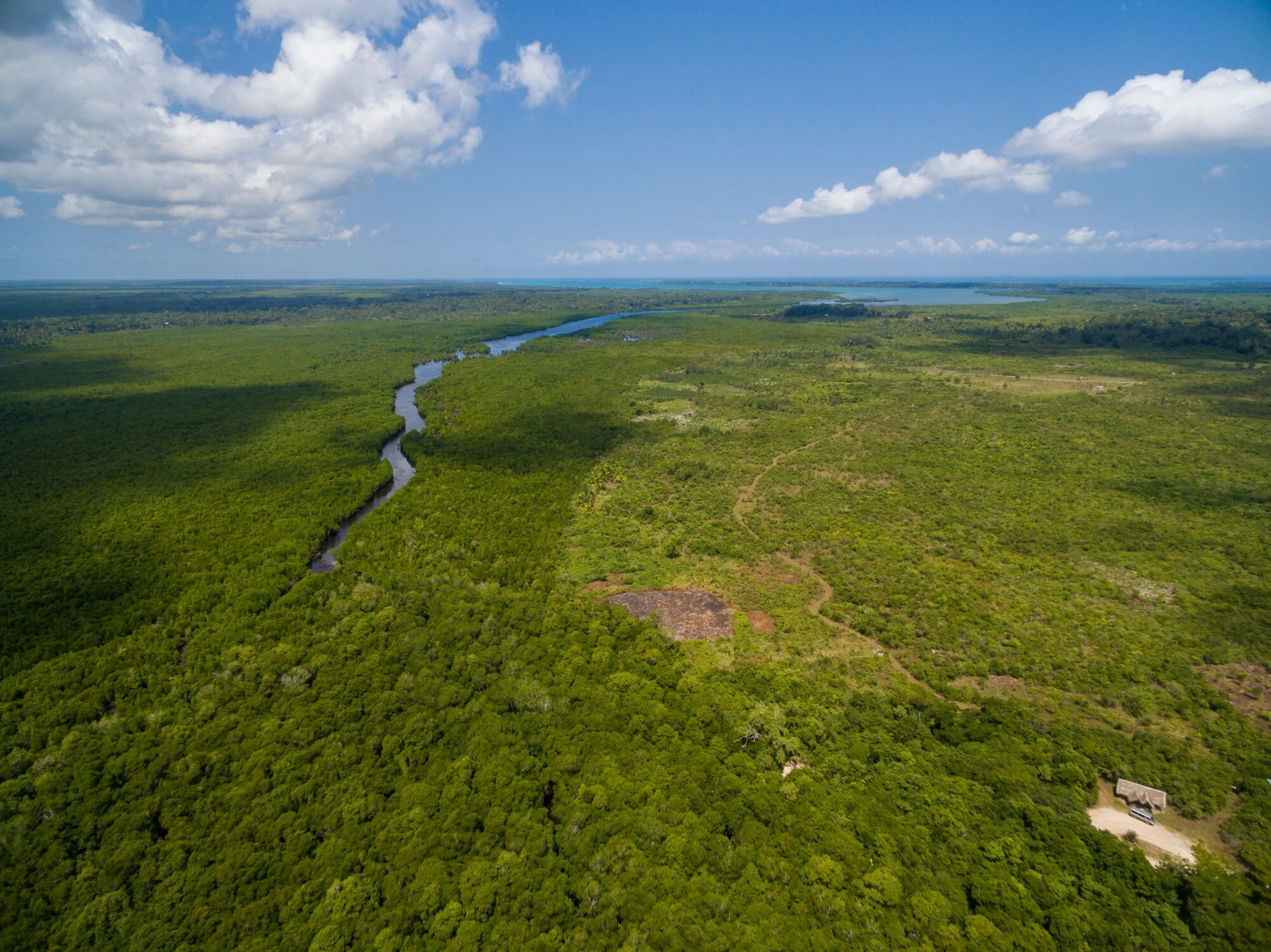
The World Bank’s new Paraná project connects basin planning, farm investment, rural services, ecosystem restoration, and urban risk reduction. Its significance lies less in any single asset than in whether those parts can be governed as one delivery system.
On 26 August, the World Bank approved a US$186 million loan for the Paraná Water Security Project in southern Brazil. The headline numbers are substantial: the programme is expected to support thousands of farms, expand water and sanitation services in rural communities, restore more than 10,000 hectares of riparian habitat, and strengthen urban water-security and disaster-risk services for millions of residents.
The more consequential feature is how the project defines the problem. It does not treat water security as a pipe programme, an agricultural extension programme, or a conservation programme with adjacent benefits. It treats a landscape as an operating system in which land management changes runoff and sediment; agricultural choices alter demand and pollution; riparian vegetation affects water quality and flood behaviour; rural services shape public health; and municipal planning determines who remains exposed when extremes arrive.
That integration is easy to describe and difficult to operate. Paraná’s project design creates three connected fields of action. One is productive: technical assistance, farm plans, climate-smart practices, and matching grants for family farms. Another is ecological and hydrological: watershed plans and riparian restoration. The third is service-oriented: rural water and sanitation alongside urban water-security and risk-management capacity. The project’s theory is that gains in one field can improve the performance of the others.
For farming, this means extension is not merely a channel for disseminating techniques. The World Bank expects about 500 rural technical-assistance professionals to be trained, 15,000 farm plans to be prepared, and roughly 8,600 family farms to receive matching grants. Those numbers describe an institutional delivery chain. Advisers must translate basin priorities into farm-level decisions; grants must finance practices that fit those plans; and monitoring must distinguish expenditure from changes in soil, water demand, erosion, and farm resilience.
For ecosystems, the proposed restoration of 10,690 hectares of riparian forests and permanent preservation areas is not decorative compensation. Riparian recovery can protect banks, moderate sediment and nutrient flows, reconnect habitat, and improve the condition of source-water landscapes. But hectares alone are an incomplete measure. Location, continuity, establishment quality, maintenance, and the relationship between restored corridors and upstream farm practice will determine whether the intervention changes watershed function.
For water governance, the planned 42 watershed plans are potentially the connective tissue. A plan can locate pressures, rank interventions, and make trade-offs visible across administrative boundaries. It can also become a static document. Its value will depend on whether investment decisions, farm-support criteria, restoration sites, and service upgrades actually follow the priorities it establishes.
The project therefore places a heavy burden on coordination. The State Secretariat of Planning is identified as the implementing agency, while the work spans public administration, water and sanitation, agriculture, irrigation, ecosystem management, and disaster risk. That breadth creates a familiar risk: every component can meet its own output target while the overall system remains fragmented. A farm plan can be completed without changing water outcomes. A restored hectare can survive poorly. A water scheme can be built without a durable operating model. A watershed plan can be approved after capital decisions have already been made.
The strongest defence is a results structure that tests interaction, not only component completion. At a minimum, Paraná will need to connect farm adoption data with sub-basin condition; restoration progress with water-quality and erosion indicators; rural-service coverage with reliability and maintenance; and municipal risk capacity with the exposure of people and assets. The World Bank estimates net sequestration of about 3.98 million tonnes of carbon-dioxide equivalent over 20 years, but the central water-security case should remain legible independently of carbon accounting.
The project’s social reach also matters. Official documents encompass agriculture, rural infrastructure, sanitation, public administration, water institutions, and social inclusion. That makes stakeholder engagement part of the delivery mechanism rather than a procedural appendix. Farmers, rural communities, municipalities, basin institutions, and service agencies encounter the programme through different incentives and timescales. Their participation must help resolve siting, sequencing, maintenance, and distributional choices before those choices become implementation disputes.
Paraná’s recent approval is therefore not proof that integration has been achieved. It is a commitment to make integration operational. The programme will be worth watching at the boundaries: between a basin plan and a farm grant; between a restored corridor and a source-water result; between a new rural asset and its operator; and between statewide coordination and municipal decisions. If those handoffs work, the project could demonstrate why water security is best managed through the relationships among systems. If they do not, a sophisticated design will still produce a collection of projects.
Take-Out
Integrated water programmes succeed when shared geography becomes shared operating discipline: common priorities, sequenced investments, accountable implementers, and measures that reveal whether benefits reinforce one another.
Questions and answers
What readers should know
- What did the World Bank approve for Paraná?
- The World Bank approved a US$186 million loan for a programme linking watershed planning, farm investment, rural water and sanitation, ecosystem restoration, and urban risk management.
- Why is the project a systems test?
- Its results depend on coordination across farm plans, watershed priorities, restored riparian areas, service operators, and municipal risk decisions rather than on any single asset.
- What should implementation monitoring reveal?
- Monitoring should show whether farm practices, restoration, service reliability, water quality, and risk reduction reinforce one another at catchment level.
Stay in the loop
Keep Mark and Focus in view
Hear about future publications, announcements, and relevant updates from Mark and Focus.