
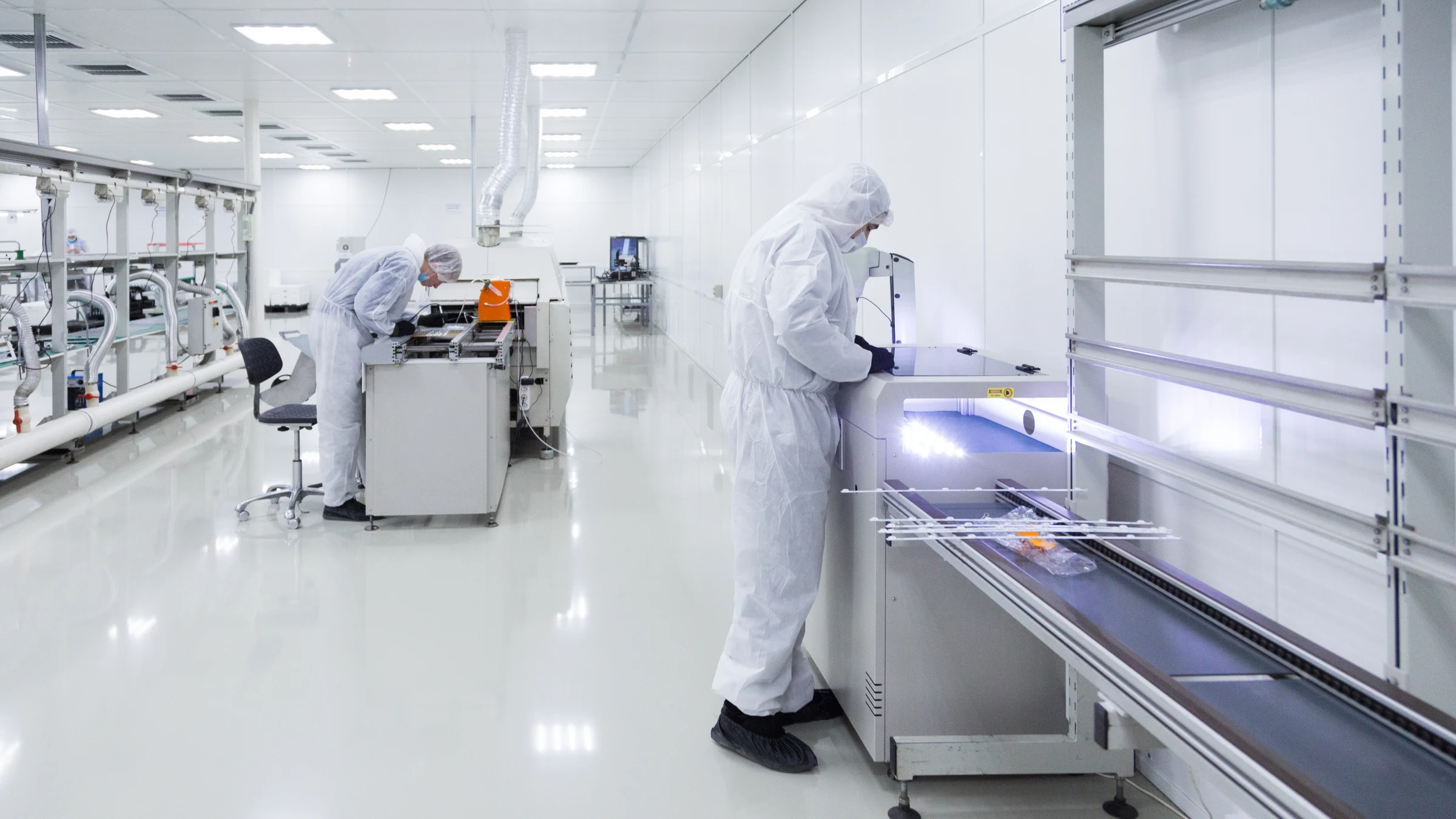
Canada's C$195 million investment in Xanadu's C$893 million Project OPTIMISM moves quantum policy beyond research support and into domestic integration, packaging, testing, and assembly. The public test is whether the new facility can qualify repeatable manufacturing processes, not merely house advanced equipment.
Canada’s latest quantum investment moves the policy focus away from the machine itself and towards the layer between scientific invention and dependable production.
On 28 August, the federal government announced C$195 million from the Strategic Response Fund for Xanadu Quantum Technologies’ C$893 million Project OPTIMISM. The company plans to transform a 158,000-square-foot Toronto site into an advanced photonics research, development, and manufacturing facility called Inception. The project is expected to create 275 jobs and add capability for integrating, packaging, testing, and assembling photonic and semiconductor components used in quantum systems.
Those functions are the point of the investment. Quantum-computing roadmaps often emphasize qubit counts, error correction, and algorithms. Yet a useful machine also requires components that can be fabricated consistently, connected into modules, tested against stable specifications, and assembled into systems that survive repeated operation. A laboratory result can demonstrate possibility; a manufacturing system must demonstrate repeatability.
The bottleneck is moving downstream
Canada already has a strong quantum research base and companies working across computing, sensing, communications, and software. Its National Quantum Strategy is organized around research, talent, and commercialization, while the quantum-computing roadmap identifies limited domestic manufacturing infrastructure as a specific constraint. Canadian researchers and smaller companies often depend on external foundries and specialized suppliers. Processes suited to prototypes do not automatically support commercial-grade scale.
Project OPTIMISM addresses that downstream gap. The announced facility is intended to combine cleanrooms, specialized tooling, round-the-clock testing and measurement, and a systems-integration center. Its significance lies in placing several handoffs in one controlled environment: photonic or semiconductor components arrive from fabrication; packaging protects and connects them; testing identifies variation; modules are assembled; and complete units are verified before installation into server racks.
Co-location can shorten feedback loops. When a component fails a test, manufacturing engineers, device designers, packaging specialists, and system teams can trace the failure through the same production record. That does not guarantee higher yield, but it makes the causes of poor yield easier to locate. A revealing measure of the facility’s operating model will be how quickly it converts failures into controlled process changes.
Public capital is buying capability before a market is mature
The federal contribution covers roughly 22 percent of the announced C$893 million project cost. This is not a conventional purchase of finished quantum computers. It is public participation in an industrial capability whose commercial market and technical endpoint remain uncertain.
That uncertainty is central to the case for support. Fault-tolerant quantum computing requires error correction at a scale that no supplier has yet industrialized. Equipment, materials, cryogenic systems, packaging methods, and test protocols may change as technical approaches advance. A private company can rationally hesitate to build capacity whose final product architecture is unsettled. Government is using the Strategic Response Fund to reduce that scaling risk while pursuing domestic supply-chain, security, and economic objectives.
The same uncertainty raises governance questions. Public reporting should distinguish capital installed from processes qualified, prototypes produced from units that meet specification, and technical progress from commercial demand. A cleanroom can be complete while manufacturing remains unstable. Jobs can be created while critical inputs continue to come from a narrow external supplier base. A component can pass an isolated test without performing reliably inside a larger module.
The facility needs staged proof
Evidence of progress has four layers.
First, facility readiness: equipment installed, cleanroom conditions validated, safety systems operating, and specialist roles filled. Second, process capability: defined tolerances, repeatable packaging and assembly steps, test coverage, yield, rework rates, and failure analysis. Third, system progress: modules that meet performance specifications and integrate into server racks without creating new reliability bottlenecks. Fourth, ecosystem effect: Canadian research institutions and small and medium-sized firms gaining usable access to equipment, contracts, standards, or supplier opportunities.
Those levels should not be collapsed into one milestone. Completing construction is not the same as qualifying a process. Qualifying a process is not the same as reaching fault tolerance. Reaching a technical milestone is not the same as establishing a sustainable market.
The federal announcement says the project will support partnerships with Canadian research institutions and smaller businesses. That promise needs an operating form. Shared test protocols, supplier-development programs, controlled access to specialized equipment, and published interface standards could spread capability beyond one company. Without such mechanisms, the investment may strengthen an anchor firm while leaving the wider ecosystem dependent on informal relationships.
Manufacturing discipline is the real national asset
Quantum technologies may ultimately transform cybersecurity, health, energy, logistics, or materials discovery. Those applications remain contingent on reliable hardware and useful performance. Canada’s immediate policy decision is narrower and more concrete: build domestic capacity to turn advanced photonic designs into tested system components.
The building will not be the most durable asset. That will be the accumulated discipline of making, measuring, learning, and making again under controlled conditions. If Project OPTIMISM produces traceable processes, a trained technical workforce, qualified suppliers, and modules that improve through evidence, Canada will have built something valuable even before fault-tolerant quantum computing becomes commercial. If reporting stops at expenditure, floor area, and equipment lists, the central industrial question will remain unanswered.
Take-Out
Canada should judge Project OPTIMISM by qualified processes, reliable component yields, supplier participation, and verified progress toward fault-tolerant systems—not by cleanroom floor area alone.
Questions and answers
What readers should know
- How much public support was announced?
- C$195 million from Canada's Strategic Response Fund toward a C$893 million project.
- What is Inception?
- Xanadu's planned 158,000-square-foot Toronto facility for photonics research, development, manufacturing, packaging, testing, assembly, and systems integration.
- Why is this different from research funding?
- It targets the repeatable production processes and physical integration needed to move designs from prototypes into dependable modules.
- What would early success look like?
- Validated equipment, qualified processes, improving yield, traceable failure analysis, and modules meeting defined specifications.
- What remains uncertain?
- The technical path and commercial timing of fault-tolerant quantum computing, supplier dependence, and whether ecosystem access extends beyond the anchor company.
Stay in the loop
Keep Mark and Focus in view
Hear about future publications, announcements, and relevant updates from Mark and Focus.