
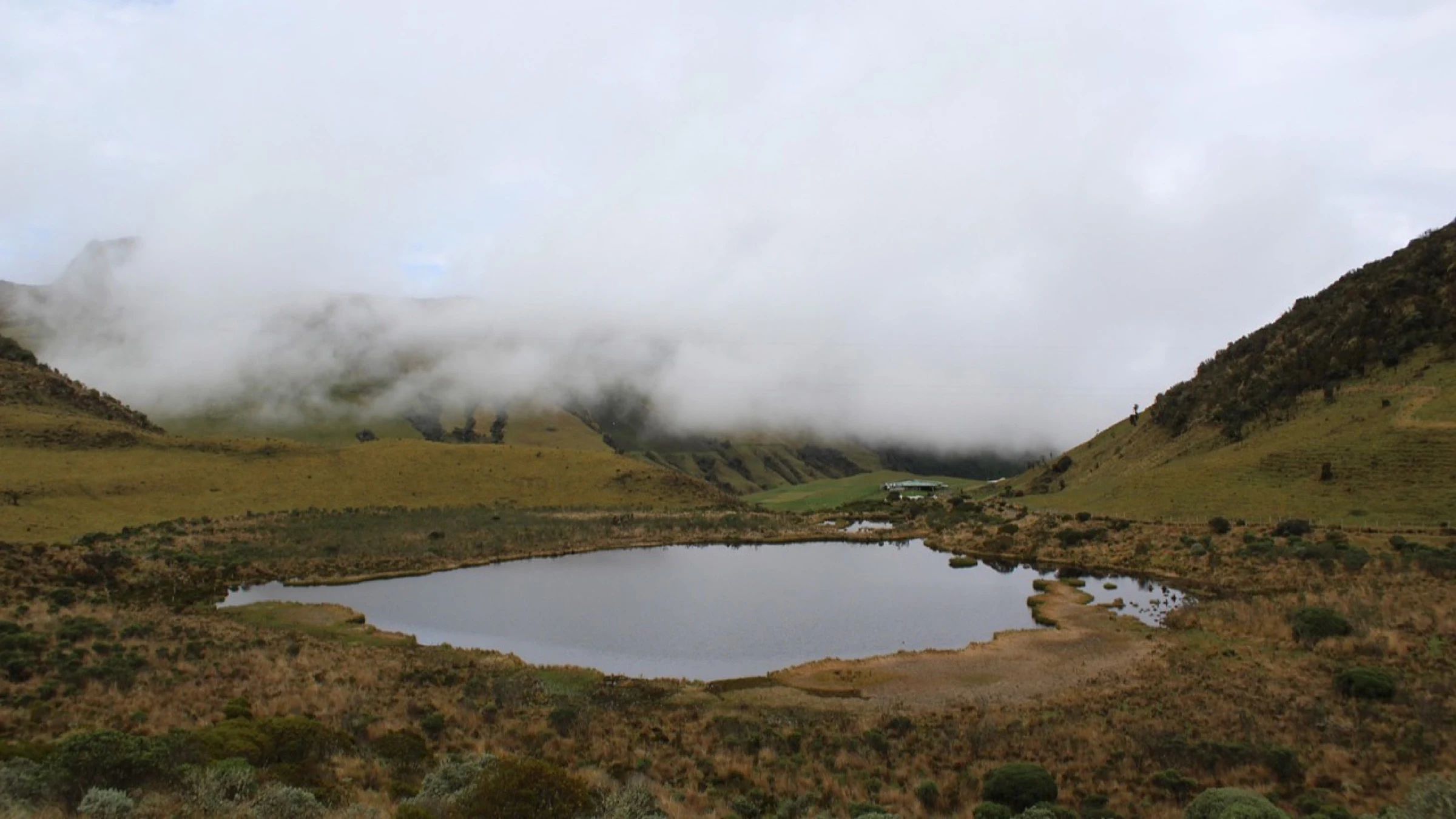
Bogotá is adapting management across 17 wetland reserves as El Niño strengthens, combining irrigation, moisture retention, invasive-species control, surveillance and water monitoring to protect 835,878 square meters already under restoration.
Bogotá has shifted its wetland work into drought operations. As El Niño strengthens, the city is reinforcing irrigation, using organic ground covers and water-retaining materials, removing combustible invasive plants and monitoring inflows at the Córdoba wetland. The measures apply across a network of 17 District Wetland Reserves.
The city reports that 835,878 square meters have entered ecological restoration during the current administration, 6.8 per cent more area than in the preceding administration. It has also treated 32,479 square meters affected by retamo espinoso, an invasive shrub that can carry fire under dry conditions. Bogotá has allocated COP49 billion in 2026 to wetland maintenance and protection.
Those figures describe a change in responsibility. Once an area has been counted as restored, the city still has to keep it functioning through a hotter, drier season.
Maintenance is part of the intervention
The conventional public image of restoration is an act of addition: plant native vegetation, remove a pressure, reconnect water or improve habitat. Drought makes the less visible work decisive. Young plants need water. Exposed soils lose moisture. Invasive vegetation can return. Fences, access control and surveillance determine whether a recovering site is repeatedly disturbed.
Bogotá’s measures respond to those operational needs. Organic cover reduces evaporation. Hydro-retaining materials store water and release it gradually. Irrigation is being reinforced with community participation. Control of retamo addresses both ecological competition and fire behavior. None is a substitute for restoring the hydrology of a wetland, but each can protect earlier investment while climatic stress tests the site.
This distinction matters because restoration area is a stock measure, while maintenance is a continuing service. A city can expand the former and still lose ecological condition if the latter is underfunded or badly timed.
El Niño makes performance visible
Colombia’s meteorological institute reported on 10 September that El Niño was strengthening and that there was a 90 per cent probability of a very strong event in the final quarter of 2026. A drought response built around periodic watering alone would be fragile under that outlook.
Wetland managers need thresholds. Soil moisture, plant stress, inflow quantity and quality, fire-weather conditions and invasive regrowth can indicate when routine care should become an intensified response. The monitoring station installed at Córdoba is important for this reason: it measures water level, flow speed, dissolved oxygen, pH, turbidity, temperature and conductivity in real time.
One station does not provide a network-wide operating picture. It does show the direction of travel. If monitoring data are linked to field decisions, the city can learn which wetlands retain water, which interventions reduce loss and where upstream water quality or unauthorized access is undermining recovery.
The next result is condition, not activity
Bogotá’s reported inputs are substantial: restored area, invasive-species treatment and a large annual allocation. The next evidence should show what those inputs preserve.
Useful measures would include native vegetation survival through the dry period, changes in soil moisture, the extent and recurrence of retamo, fire incidents, water-quality excursions and the duration of viable wetland habitat. These should be read site by site. The 17 reserves differ in hydrology, surrounding land use, pollution exposure and community relationships; a single network average can hide a failing wetland inside an improving total.
The program’s strongest insight is that restoration does not end when land enters a project boundary. Under El Niño, the city is responsible for the ecological condition it has helped to create. That is a more demanding standard—and a more useful definition of urban nature-based adaptation.
Take-Out
Urban wetland restoration becomes climate infrastructure only when the city can keep recovered vegetation alive, control new fire risks and read changing water conditions during the stress it was meant to withstand.
Questions and answers
What readers should know
- What is Bogotá doing differently?
- It is adapting wetland maintenance for heat and reduced rainfall through reinforced irrigation, moisture-retention measures, invasive-species control, monitoring, fencing and surveillance.
- How much wetland area is under restoration?
- The current administration reports 835,878 square meters across the city’s 17 District Wetland Reserves.
- Why is retamo espinoso an operational risk?
- It competes with native recovery and is highly combustible in dry conditions, linking invasive-species management to fire prevention.
- What does the Córdoba monitoring station measure?
- It records water level, flow speed, dissolved oxygen, pH, turbidity, temperature and conductivity in real time.
- What would show that the response worked?
- Survival of restored vegetation, retained soil moisture, controlled invasive regrowth, fewer fire losses and water conditions capable of sustaining wetland habitat through the dry period.