
Mark and Focus analysis
Spain’s Transport Energy Framework Looks Beyond the Charger Count
Read the analysis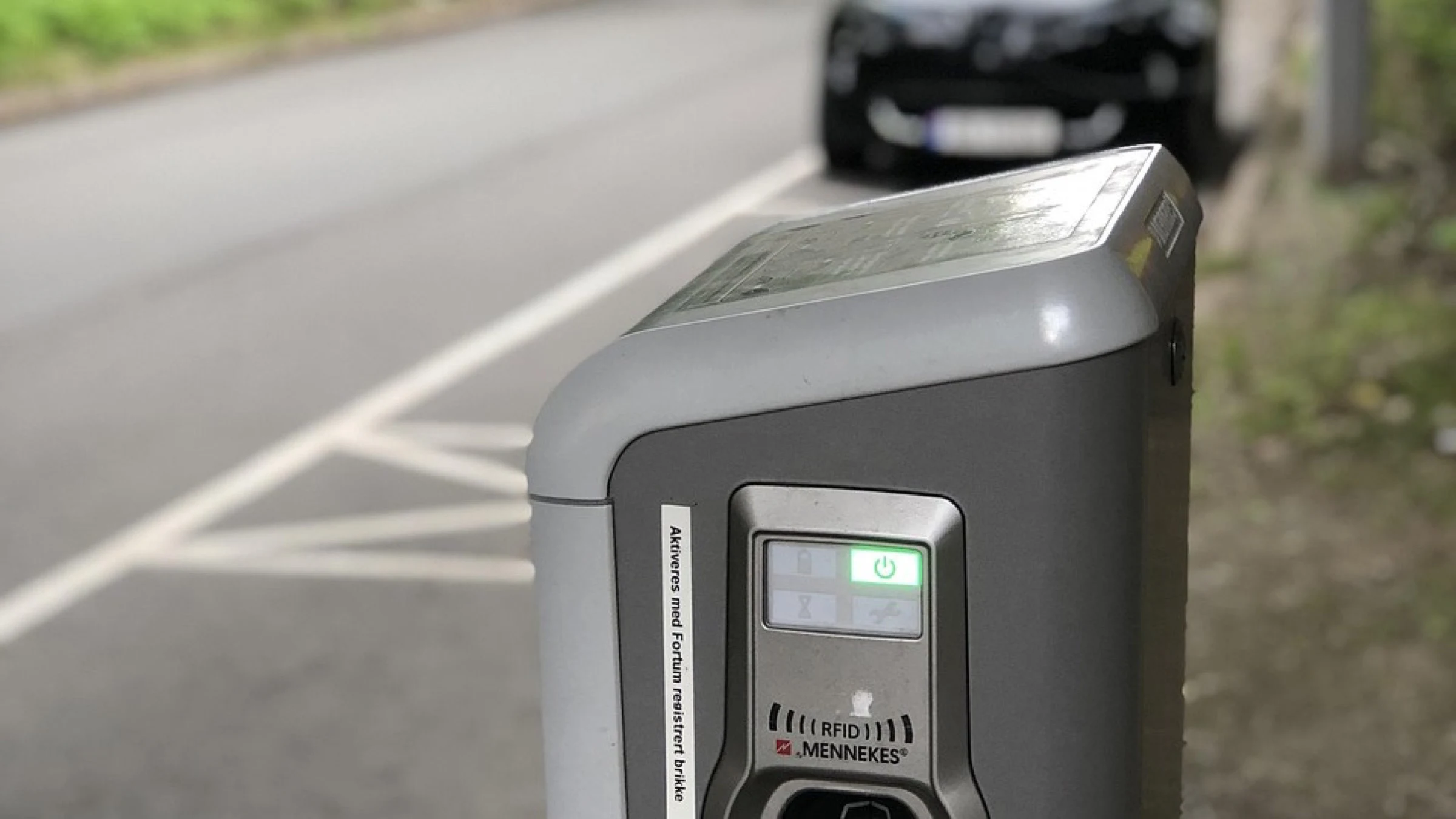
Spain’s draft national framework combines road charging, port electricity, airport ground power and alternatives for unelectrified rail. Its implementation challenge is to turn different measures and investment plans into infrastructure that vehicles and operators can actually use.
Spain’s new national framework for alternative-fuels infrastructure asks a broader question than how many public chargers have been installed. Road vehicles, ships at berth, parked aircraft and trains each need energy in different places and operating conditions. A country can make progress on one of those requirements while leaving another unresolved.
The Ministry for the Ecological Transition and the Demographic Challenge and the Ministry of Transport and Sustainable Mobility announced the framework on 14 September. Public consultation runs from 15 September to 2 October. The draft brings existing measures and planned interventions into the national process required by the European alternative-fuels infrastructure regulation, known as AFIR.
Its immediate significance is the scope of the delivery account: a mixture of installed capacity, regulatory requirements, funding programs and technologies still being evaluated. Reading those categories separately gives a more useful picture than treating the framework as one completed investment.
Road charging moves from totals to usable coverage
The ministry reports 42,318 public charging points and 2,269,170 kW of nominal installed power. It says that total exceeds the minimum power requirement for the present light electrified-vehicle fleet by a factor of 2.66. That is evidence about an aggregate requirement, not a guarantee that the right charging capacity exists along every route.
The framework therefore gives priority to higher-capacity coverage on major roads. MOVES Corredores provides a €200 million program for installations with at least 300 kW of aggregate power. The useful delivery question is where those installations close a journey gap, rather than whether they merely add to the national total.
Driver information forms another part of the service. The government highlights the REVE map, which presents availability and prices, and consistent signs directing road users to charging stations. Physical capacity, a station’s availability and a driver’s ability to find it are different contributions to a usable route. Counting the equipment alone captures only one.
Heavy transport changes the investment problem
The framework recognizes that road freight is highly fragmented and dominated by microenterprises. A passenger-car charging policy cannot simply be expanded in size and assumed to meet those operators’ needs. Fleet replacement and depot or public charging require investment decisions by businesses with different resources and operating schedules.
The government plans dedicated coverage in safe and secure parking areas and is working on future support for fleets and charging infrastructure. These are prospective measures. The framework should make clear which lines are open, which are being designed and which depend on later decisions, so operators can distinguish an available investment route from an intention.
The consultation document explicitly identifies obstacles and lists adopted and planned measures to address them. That distinction gives the national framework a useful discipline: its account must explain the distance between an infrastructure target and a practical path to use.
Port electricity has a berth-level test
For maritime transport, the purpose of shore-side power is to allow ships to switch off auxiliary engines while alongside. The ministry identifies 26 ports subject to the European requirement and a projected 919 MW by 2030 to serve at least 90% of qualifying container and passenger-ship calls above 5,000 tonnes.
A power target has to be read with the berth and vessel requirements behind it. Capacity installed at a port does not automatically show that a particular arriving ship can receive electricity at the berth it uses. The relevant service measure is the share of qualifying calls that can actually be supplied.
The ministry cites €778.7 million in the Puertos del Estado business plan for 2025–2029 as a principal financial reference for port electrification and adaptation to alternative fuels. That is a planning and financing context. It should not be presented as evidence that every corresponding berth conversion is finished.
Airports and rail require different technology choices
The ministry reports that contact stands at airports in the core and comprehensive networks already have fixed electricity supplies. Remote stands are following a different path, progressively replacing conventional diesel ground-power units with electric equipment or units using renewable fuels. The remaining task concerns those operating arrangements, not simply duplicating the completed fixed-supply measure.
Rail presents another choice. The ministry reports 67% of the national rail network electrified, with 5,175 kilometres remaining under diesel traction. Works underway would add roughly 1,700 electrified kilometres and bring network coverage to 78%. It separately says 92% of Renfe’s current freight and passenger traffic already uses electric traction. Track coverage and traffic coverage therefore describe different aspects of the transition.
For lines where conventional electrification is not socioeconomically justified, the framework proposes evaluating battery or hydrogen trains and gathering technical information through a market consultation. Those alternatives are being assessed; the framework does not establish a winning technology for every line.
Spain’s next delivery account should keep these differences visible. A usable charging corridor, a powered ship call, a cleaner remote airport stand and a justified traction choice each require their own evidence. The national framework is most valuable when it makes that evidence comparable over time without pretending that every mode can be judged by the same installed-capacity statistic.
Take-Out
Spain should assess each transport mode against its own service requirement: usable road-charging coverage, powered berths, cleaner airport ground operations and justified rail technology choices. One national capacity total cannot demonstrate all four.
Questions and answers
What readers should know
- What was announced?
- A draft national framework for deploying alternative-fuels infrastructure across several transport modes.
- When does consultation close?
- 2 October 2026.
- Why is the public charging-point total insufficient?
- National totals do not establish route coverage, availability or suitability for different vehicles.
- What is the port-electricity objective?
- To make shore-side electricity available for qualifying ship calls so vessels can turn off auxiliary engines at berth.
- Are battery and hydrogen trains already selected for all remaining lines?
- No. The framework proposes evaluation where conventional electrification is not socioeconomically justified.