
Mark and Focus analysis
The Nature-Based Infrastructure Accelerator Still Has to Build an Investment Route
Read the analysis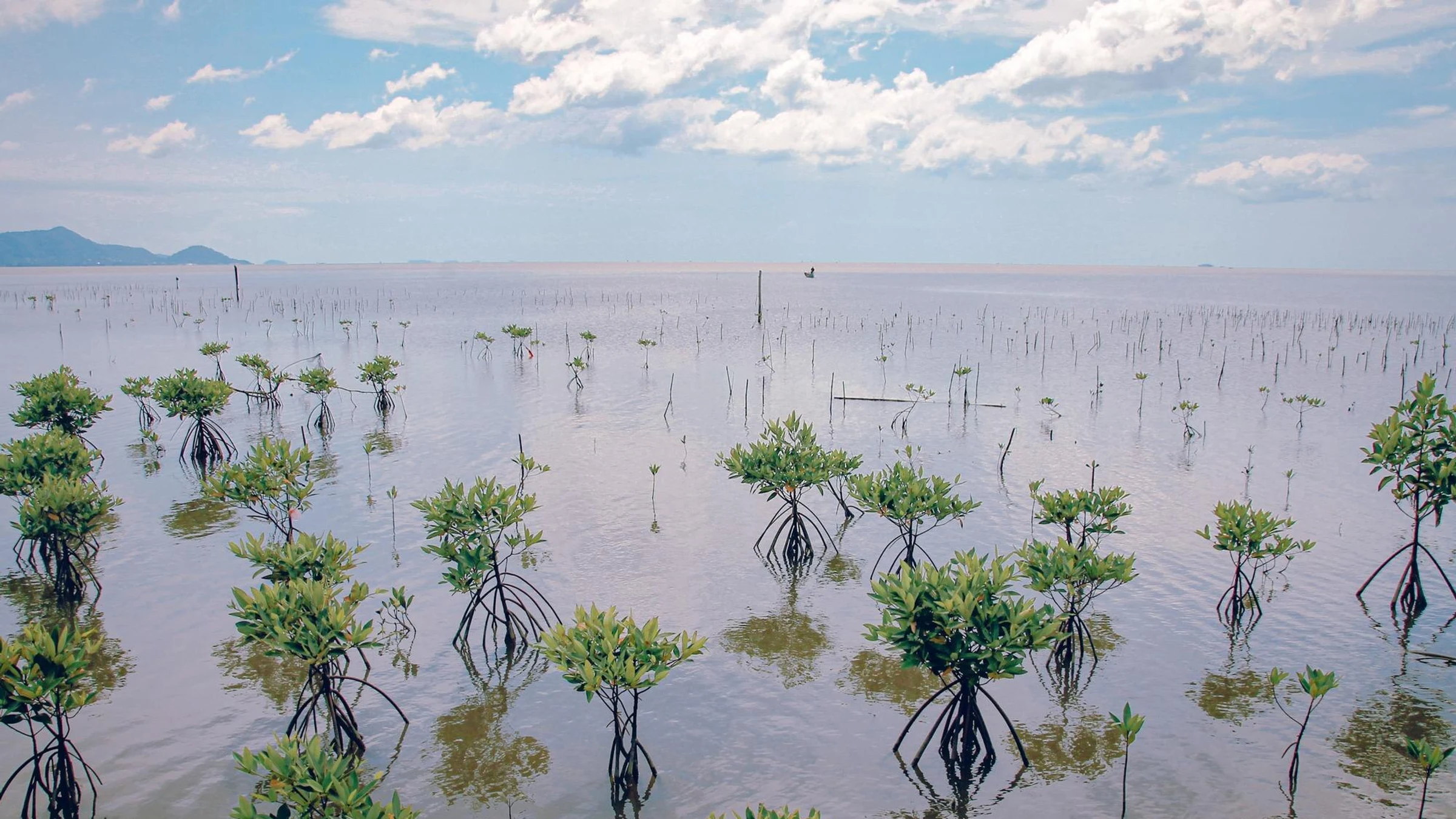
UNEP, Italy and the OECD used UNCCD COP17 to advance a nature-based infrastructure accelerator focused on Central Asia and selected African logistics systems. Its central challenge is converting ecosystem functions into investable, accountable infrastructure projects.
The Nature-Based Solutions Innovation Accelerator was presented at UNCCD COP17 in Ulaanbaatar on 25 August as a route for bringing nature into infrastructure planning and investment. Led by Italy’s Ministry of Environment and Energy Security with UNEP and OECD involvement, the initiative is aimed at developing and emerging economies. OECD program material gives it an initial geography: water, energy, transport and urban infrastructure in five Central Asian countries, with selected African work focused on ports and logistics.
That remit is promising because it moves beyond isolated conservation projects. It is also demanding. Infrastructure institutions buy services: flood attenuation, slope stability, water regulation, heat reduction, coastal protection and operational continuity. Ecosystems can contribute to those services, but a project becomes investable only when the contribution can be designed, governed and maintained within the wider asset system.
Start with the service, not the label
A mangrove belt may reduce wave energy around a coastal asset. Vegetated slopes may reduce erosion affecting a road or reservoir. Wetlands may manage stormwater around an urban system. None should enter an infrastructure plan simply because it qualifies as nature-based.
The project case must begin with the service problem and the conditions under which the ecosystem function is expected to help. What hazard is being reduced? Which asset or community receives the benefit? How does performance change under severe events, seasonal variation or ecosystem degradation? What conventional infrastructure remains necessary?
These questions make green-grey integration practical. Nature-based and engineered components do not need to compete for the entire job. A wetland can reduce a treatment or drainage burden while pipes and controls manage flows beyond its capacity. Mangroves can reduce coastal exposure while ports retain structural defenses and emergency procedures. The design should state where one component’s function ends and another’s begins.
The business case needs ecological and financial clocks
Conventional project finance is organized around development, construction, commissioning and operation. Ecosystems follow different timelines. Vegetation takes time to establish. Performance may improve with maturity, decline without maintenance or change after storms, drought or invasive-species pressure.
An investable structure must connect those ecological stages to payment and risk. A contractor can be responsible for planting, but who is responsible for survival after three years? If the measure does not reach the assumed density or condition, does the infrastructure operator retain enough protection? Who funds adaptive management? How are community access and land rights handled where the protective ecosystem extends beyond the asset boundary?
The accelerator’s policy component, assigned to the OECD, is intended to examine barriers and the business case for uptake. That work will be strongest if it produces project-level decision tools rather than another estimate of the global benefits of nature. Infrastructure agencies need procurement forms, performance indicators, maintenance duties and ways to compare whole-life cost and risk across green, grey and combined options.
A pipeline is different from a platform
The COP17 event assembled UNEP, OECD, development-bank and public-sector perspectives around operational and financial challenges. That convening can align institutions, but it does not yet establish a pipeline of financeable projects.
A pipeline requires named problems, responsible asset owners, site evidence, feasible interventions and a route to capital. Early-stage technical assistance can help owners develop baselines, model performance, resolve land questions and choose monitoring systems. Later finance should remain conditional on a project’s ability to preserve the ecological mechanism during construction and operation.
Central Asia provides a consequential test. Water, energy and transport systems cross arid and mountainous landscapes, and infrastructure decisions interact with rivers, soils, vegetation and land use. African port and logistics work introduces coastal exposure, trade dependencies and surrounding communities. The accelerator should resist transferring one design standard across these settings. Its scalable product is more likely to be a decision method and evidence framework than a standard physical intervention.
What progress would look like
The initiative can be judged through a sequence of increasingly credible outputs. Country engagement and studies show institutional reach. A screened project pipeline shows whether asset owners have brought real problems forward. Completed feasibility work shows whether ecosystem functions and site constraints have been analyzed. Financial close shows that risk and capital have been allocated. Operating evidence shows whether the combined infrastructure performs.
Reporting should retain those stages. A workshop is not a project, a project concept is not an investment, and an installed intervention is not yet a reliable service. The accelerator’s value lies in helping credible ideas cross those boundaries without overstating where they stand.
Nature-based infrastructure has spent years accumulating examples and benefit claims. The NBS-IA now has an opportunity to concentrate on the institutional middle: the decisions, contracts, evidence and maintenance arrangements that turn a promising ecosystem function into part of a dependable infrastructure system.
Take-Out
The accelerator needs a project pathway that connects ecological performance to infrastructure service, risk allocation, finance and long-term maintenance.
Questions and answers
What readers should know
- Who leads the accelerator?
- Italy’s Ministry of Environment and Energy Security, with UNEP collaboration and OECD support.
- Where is the initial focus?
- Water, energy, transport and urban infrastructure in five Central Asian countries, plus selected African work on ports and logistics.
- What makes a nature-based measure investable?
- A defined service, site evidence, allocated risks, responsible ownership, finance and maintenance tied to measurable performance.
- Why combine green and grey infrastructure?
- Ecosystems can reduce exposure or operating burdens while engineered systems handle loads, controls or reliability requirements beyond natural capacity.
- What should be reported next?
- A staged record moving from country engagement to screened projects, feasibility, finance, installation and verified operating performance.