
Mark and Focus analysis
Kiteezi’s First Rehabilitation Phase Reduces Risk Without Closing Kampala’s Waste Gap
Read the analysis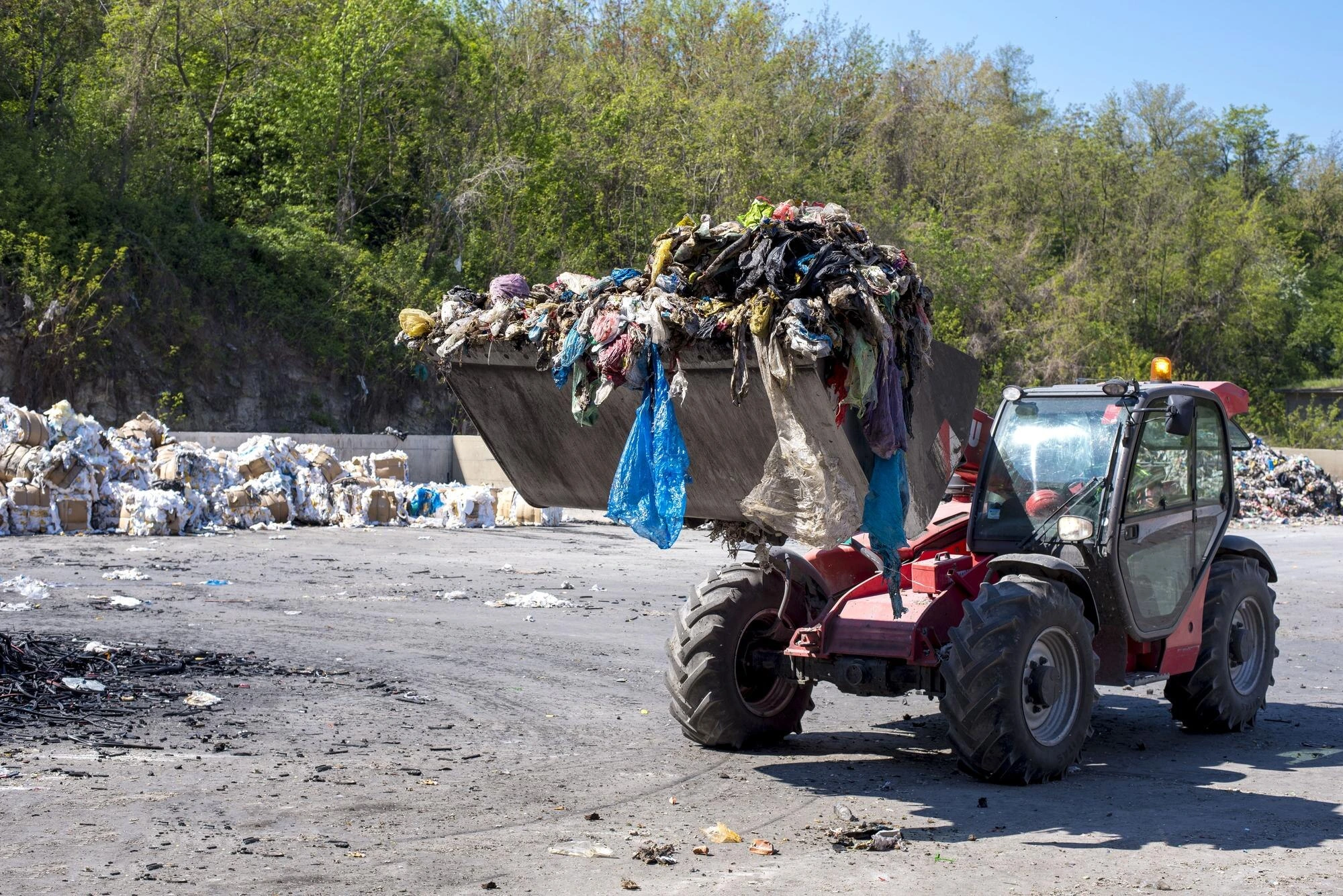
Uganda has accepted the first rehabilitated section of Kiteezi landfill after the 2024 collapse. The works demonstrate practical stabilization, gas, drainage, and leachate measures, while more than half the site and Kampala’s wider disposal system remain unfinished.
On 5 August, UN-Habitat handed the first rehabilitated section of Kiteezi landfill to the Government of Uganda and Kampala Capital City Authority. The milestone comes two years after the landfill collapsed, killing residents, destroying homes, displacing families, and disrupting the waste system serving Kampala and the wider metropolitan area.
The completed work is significant because it converts an emergency intervention into physical risk reduction. Engineers originally aimed to stabilize 4.3 hectares of the most vulnerable area. The programme ultimately covered 6.8 hectares—about 16.8 acres, or nearly 47 per cent of the landfill. Works included reshaping and terracing waste slopes, controlled compaction, embankment stabilization, drainage, access improvements, gas venting, and leachate collection.
The engineering approach uses the Fukuoka method, a semi-aerobic landfill technique developed in Japan. Air is allowed to circulate through the waste body while leachate is collected and drained. The approach can accelerate stabilization, reduce methane accumulation and fire risk, and improve the quality of leachate before treatment. At Kiteezi, vertical vents and a branching drainage network address risks that had accumulated inside a steep, overloaded waste mass.
The method’s relevance to Kampala is partly practical. It can use locally available materials and does not depend on a highly mechanized landfill-gas system. UN reporting during construction described more than 1,200 vertical pipes and the use of locally produced recycled-plastic components. That creates a small circular connection inside the recovery effort: plastic waste is used in infrastructure that helps manage emissions and contaminated liquid from the landfill.
But the handover should not be mistaken for closure. Roughly 20 acres remain to be rehabilitated, and UN-Habitat has estimated that completing the rest could require about US$5 million. Residents have also called for dependable drainage and a functioning leachate-treatment system. The first phase has reduced immediate instability in priority sections; it has not removed every environmental pathway or restored the full site.
Long-term performance will be determined after the ceremony. Waste slopes settle. Drains block. Leachate chemistry and volumes change with rainfall. Gas pathways shift. Vegetation and erosion controls need maintenance. KCCA therefore inherits not only rehabilitated ground but an inspection, monitoring, and maintenance obligation. The authority needs clear thresholds for intervention, stable budgets, trained personnel, and public reporting that allows neighbouring communities to see whether safety is being preserved.
The wider waste flow is equally important. Kiteezi served as Kampala’s principal disposal site for nearly three decades. Stabilizing old waste does not answer where new waste should go, how much should be diverted, or how collection and transfer should be organized. KCCA has separately sought contractors for further remediation and for a modern integrated waste-management facility. Those procurements must connect to the rehabilitation plan. Otherwise, pressure to restore disposal capacity can compete with the need to keep unstable areas closed and monitored.
An integrated facility will not solve the system by itself. Kampala needs reliable collection, safer transfer, materials recovery, organic-waste treatment, controlled residual disposal, and enforceable operating standards. Informal workers and nearby residents are part of that transition. Changes in access or material flows can affect livelihoods even where the engineering case is strong.
Kiteezi also illustrates a difficult institutional sequence after infrastructure failure. First comes emergency stabilization. Then comes completion of environmental controls. Then long-term operations and monitoring. Alongside all three, the city must build an alternative waste pathway so that the recovered site is not pushed back toward unsafe use. Funding often arrives for the visible first step and becomes harder to secure for the remaining years of maintenance and system reform.
The Japan-funded, UN-Habitat-supported phase shows that a lower-cost method can be adapted with local materials and delivered beyond its original area target. Its greatest value may be as a demonstration for other uncontrolled disposal sites in Uganda. Replication, however, should follow diagnosis. Slope geometry, waste composition, rainfall, drainage, settlement, and nearby water systems differ from site to site.
The correct measure of the August handover is therefore neither disaster solved nor pilot only. Kiteezi landfill rehabilitation has now delivered meaningful engineering treatment across nearly half the site, and municipal staff have gained experience with a practical stabilization method. The remaining task is explicit: complete the site, operate the controls, protect neighbouring communities, and prevent Kampala’s next generation of waste from recreating the same physical risk.
Take-Out
Landfill rehabilitation becomes durable only when engineered risk reduction is joined by monitoring, operating capacity, collection reform, and a credible alternative for future waste.
Questions and answers
What readers should know
- What is the immediate purpose of Kiteezi landfill rehabilitation?
- The work is intended to stabilise the site, reduce environmental and public-safety risks, and improve control after the deadly August 2024 collapse.
- Why is engineering work alone insufficient?
- A safer site still depends on monitoring, operating discipline, leachate and gas management, institutional capacity, and controls over incoming waste.
- What is Kampala’s wider systems challenge?
- The city needs reliable collection, diversion and treatment alongside a credible long-term disposal alternative so pressure does not simply return to Kiteezi.