
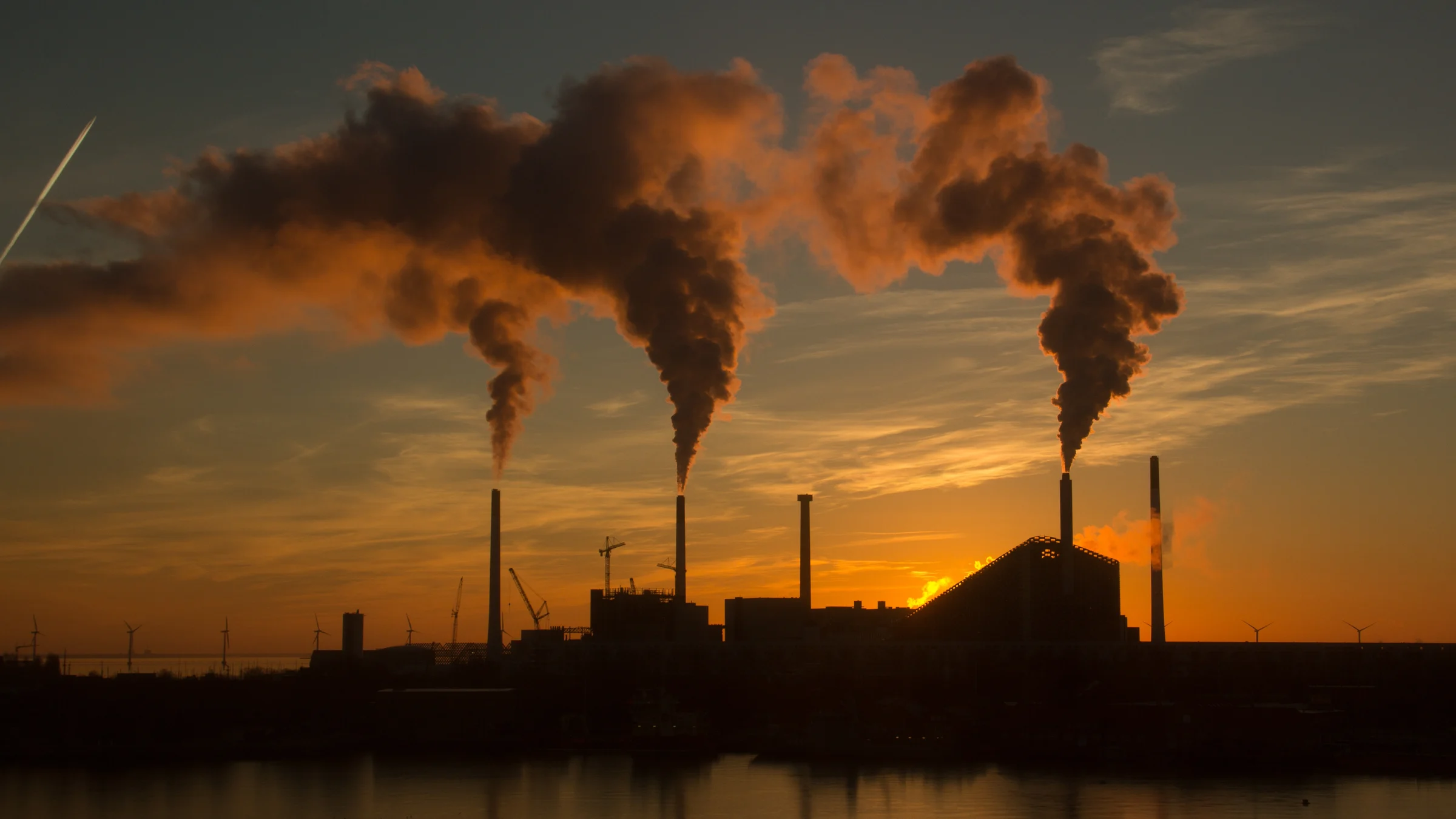
Japan's Environment Ministry has selected a Koriyama demonstration that links carbon capture at a municipal waste facility with regional conversion and use, testing whether public infrastructure can anchor a local carbon-utilisation chain.
Japan’s Environment Ministry has selected one project for its 2026 public-facility regional carbon-circulation demonstration. The consortium, led by Kawasaki Heavy Industries with Air Water East Japan, Tobu Gas and Nitto Boseki, will build around a municipal waste-treatment facility in Koriyama.
The project starts from a practical concentration of emissions. Waste incineration produces a continuous flue-gas stream at a publicly controlled site. Kawasaki has already completed equipment there for a demonstration of its carbon-dioxide separation and capture technology. The new selection extends the question beyond capture: can carbon move from that facility through conversion and local use in fuels, chemical products or other applications that meet regional demand?
That makes the project a supply-chain test. The components are familiar in isolation—capture equipment, industrial gases, energy distribution, manufacturing and municipal waste operations. The challenge is to connect them at a scale and quality that can function outside a laboratory.
A public facility can provide an anchor
A municipal waste plant offers a stable institutional starting point. Its location, operating schedule and public purpose are known. It can support a long-duration demonstration more credibly than a temporary emissions source, and it may allow local government to coordinate land, permits, data and nearby users.
Public ownership does not remove commercial questions. Captured carbon must meet a specification. Compression, purification, storage and transport add equipment and energy demand. A user must accept the volume when it is produced or the system needs buffer capacity. If the intended product market is small or intermittent, capture equipment may operate below its designed potential.
The anchor therefore works only when the rest of the chain has compatible capacity.
Local circulation needs a real destination
The ministry’s program is designed around local production and use of captured carbon. Shorter transport can reduce cost and infrastructure requirements, but proximity is not a market. The project must identify which user can take the carbon, in what form, at what price and for how long.
Different destinations have different climate implications. Carbon incorporated into a durable product can remain stored for a period. Carbon converted into fuel will generally return to the atmosphere when the fuel is used. Both may displace another input, but the avoided process and energy source determine the net effect.
The demonstration should consequently account for the complete route: separation at the waste plant, conditioning, movement, conversion, product use and eventual release or retention. Calling the route circular does not make every outcome equivalent.
Energy use sits inside the carbon balance
Capture and conversion require energy. A technically successful process can still deliver a weak emissions result if steam, electricity, hydrogen or transport have a high carbon intensity. Waste incineration also contains carbon from both biogenic and fossil-derived materials, which may be treated differently in emissions accounting.
A credible assessment needs a baseline showing what the plant and intended users would have done without the project. It should then report captured tonnes, capture rate, energy consumed, carbon transported, product output, displaced inputs, operational availability and net lifecycle emissions. The boundary must include failed runs and periods when captured carbon has no destination.
Cost deserves the same completeness. Capital support can prove equipment performance while leaving recurring energy, maintenance and logistics costs unresolved. A replicable model should show which participant pays each cost and what revenue or avoided expenditure supports continued operation after the demonstration.
The consortium is part of the experiment
The four-company structure brings together capabilities that a local carbon chain requires, but the published selection notice does not yet assign every role or disclose the final product route, volumes, timetable and performance targets. Those are evidence gaps, not reasons to discount the project. They define what later reporting must clarify.
Institutional performance will be visible in how consistently the partners exchange specifications, production forecasts, custody data and operating decisions. If one participant changes output or maintenance plans, the others need to know whether the carbon can still be captured, moved and used.
Koriyama is not evidence that municipal carbon utilisation is already a scalable climate solution. It is a chance to test the exact dependencies that broad circular-carbon strategies often leave implicit. The useful result may be a working regional chain, a narrower set of viable applications, or a clear account of where energy and cost prevent replication. Each would be more valuable than a capture figure presented without its destination.
Take-Out
The Koriyama project will matter if captured carbon becomes a reliable, lower-emission regional input; capture volume alone cannot prove that the local chain works or improves the climate balance.
Questions and answers
What readers should know
- What was announced?
- Japan's Environment Ministry selected one 2026 demonstration for a public-facility-led regional carbon-circulation model in Koriyama.
- Who is involved?
- Kawasaki Heavy Industries leads a consortium with Air Water East Japan, Tobu Gas and Nitto Boseki.
- What is the anchor facility?
- A municipal waste-treatment facility whose incineration flue gas can provide carbon dioxide for capture.
- What must the demonstration prove beyond capture?
- That carbon can be conditioned, moved, converted and used through a dependable regional chain with a credible lifecycle benefit.
- What remains unknown publicly?
- The final product route, partner roles, volumes, timetable, cost structure and performance targets are not fully specified in the selection notice.
Stay in the loop
Keep Mark and Focus in view
Hear about future publications, announcements, and relevant updates from Mark and Focus.