
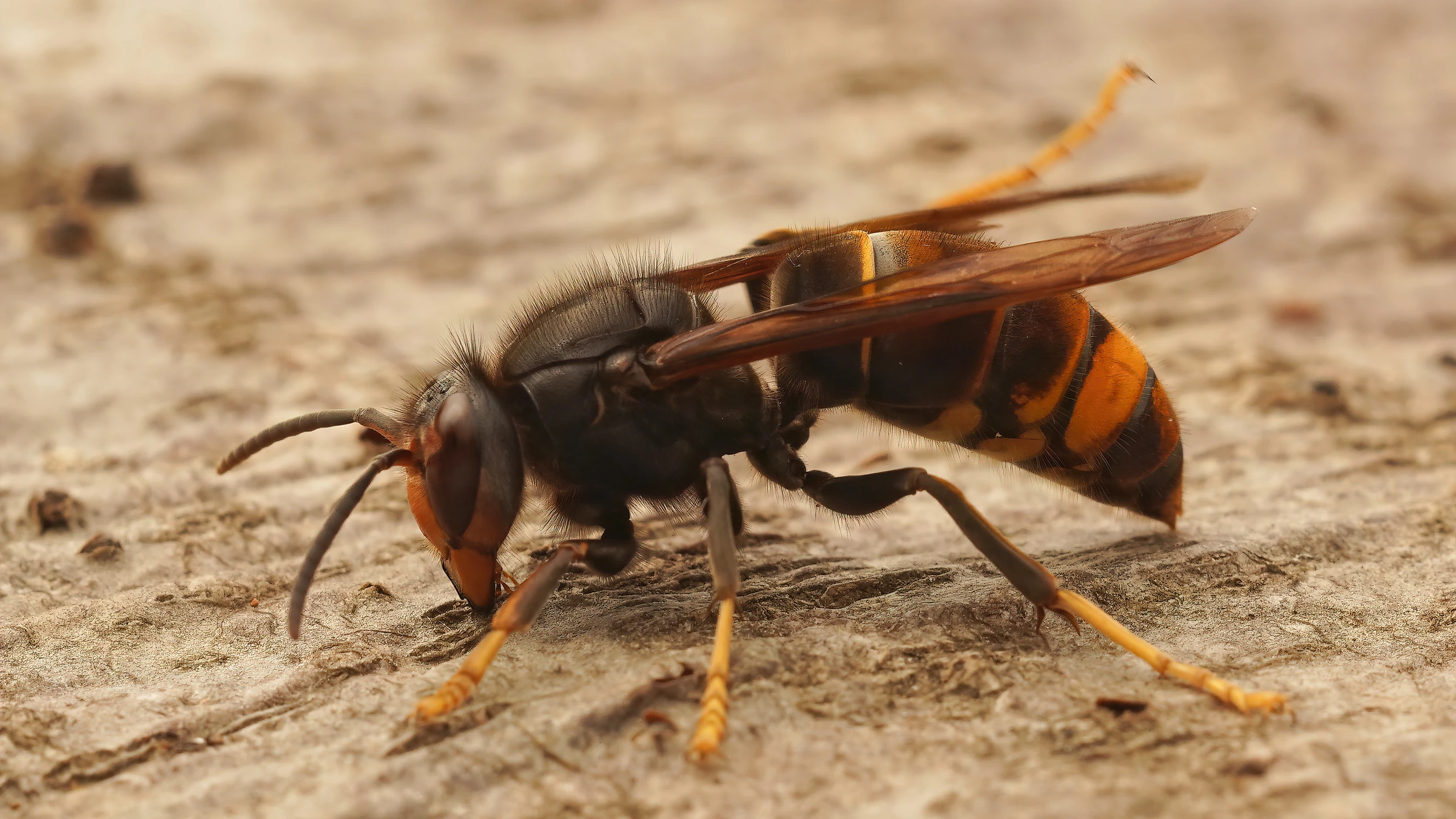
France’s adopted hornet-control plan organizes responses around local pressure and selective methods. Prefects must develop departmental plans within six months, connecting national guidance with reporting, danger assessment and nest destruction while retaining uncertainty about wider biodiversity impacts.
France’s national plan for hornet control starts from an uncomfortable condition: complete eradication is no longer considered feasible. The September 16 announcement instead describes management of the yellow-legged Asian hornet, with responses adjusted to territorial conditions. An order signed on September 9 adopts the plan, giving the framework a defined legal footing.
The change is therefore a way to organize control where the species is already established. It combines research, local pressure assessment and departmental responsibility. The value of that combination lies in choosing an appropriate action for a particular problem, rather than assuming that more activity everywhere necessarily produces better protection.
Pressure determines the response
The plan groups departments into four pressure levels and envisages management adapted to the classification. Available responses include detecting and destroying nests, trapping founding females in spring and measures that reduce stress on bee colonies. Those actions address different moments and manifestations of the problem.
A nest that presents a local danger calls for a different decision from an assessment of predation pressure around an apiary. The same action need not be appropriate in both circumstances. Classification gives authorities a way to distinguish need before deciding the intensity and form of a response.
The framework does not establish that any one of these methods is uniformly effective across France. Nor does the announcement provide departmental performance results. Its significance is that a national approach can be consistent about how a problem is assessed while allowing its management to vary with the situation on the ground.
Selectivity is part of protection
Control methods can affect species other than the intended target. The plan therefore emphasizes selective techniques to limit harm to non-target organisms, and includes research into methods that are both more effective and more environmentally respectful. That requirement belongs inside the choice of intervention, not at the end of a campaign report.
It would be possible to count a large volume of captures while failing to describe what was captured. Such a count would provide weak evidence of ecological benefit. Assessing a method means asking whether it addresses the hornet pressure that prompted the action and whether it creates avoidable collateral harm.
The ministry is also careful about the underlying impacts. Predation on domestic bee colonies is a stated concern, while effects on wild pollinators and wider biodiversity need further study. Those are related questions with different evidentiary states. Apiary protection can be justified without claiming that every broader biodiversity effect has already been quantified.
Departmental plans give the national framework an address
Within six months of adoption, each department is to develop a control plan under the prefect’s authority. Consultation includes local authorities, health actors, affected sectors, environmental associations, the French Office for Biodiversity and people using natural areas. The plans are intended to organize reporting, assessment of danger and nest destruction in the local setting.
That is where a reported sighting has to become an assessed problem. A resident’s concern, an apiary’s experience and a danger assessment are useful inputs, but they are not automatically the same evidence. A departmental plan can make their routes clearer, so an intervention follows an understood reason rather than an undifferentiated demand to act.
France has also mobilized an exceptional €3 million envelope for 2026. The announced funding supports immediate territorial action and development of better, more selective solutions. It is a resource commitment, not a published measure of control success.
The plan’s distinctive contribution is to make restraint operational. Authorities have a common framework for responding to a widespread species, but the response must remain proportionate to local pressure and attentive to what a method affects. A useful departmental record would show both why action was warranted and why the chosen technique was the appropriate one.
Take-Out
Hornet management needs two judgments: how much pressure a place faces and what a control method harms. France’s plan makes local targeting and protection of non-target species part of the same decision.
Questions and answers
What readers should know
- Is France aiming at complete eradication?
- The ministry states that complete eradication is no longer feasible given the species’ spread. The plan focuses on limiting impacts.
- How is action targeted?
- Departments are classified into four pressure levels, with management adapted to local conditions.
- Why must methods be selective?
- The plan seeks to limit harm to non-target species while improving control effectiveness.
- Who develops the local plans?
- Each department is to prepare a plan under the prefect’s authority within six months of national adoption, with consultation of relevant local actors.
- Does the funding prove successful control?
- No. The exceptional €3 million for 2026 is a resource commitment; the announcement does not present departmental performance outcomes.
Stay in the loop
Keep Mark and Focus in view
Hear about future publications, announcements, and relevant updates from Mark and Focus.