
Mark and Focus analysis
Guatemala’s Airport Recovery PROGRAM Starts Beyond the Runway
Read the analysis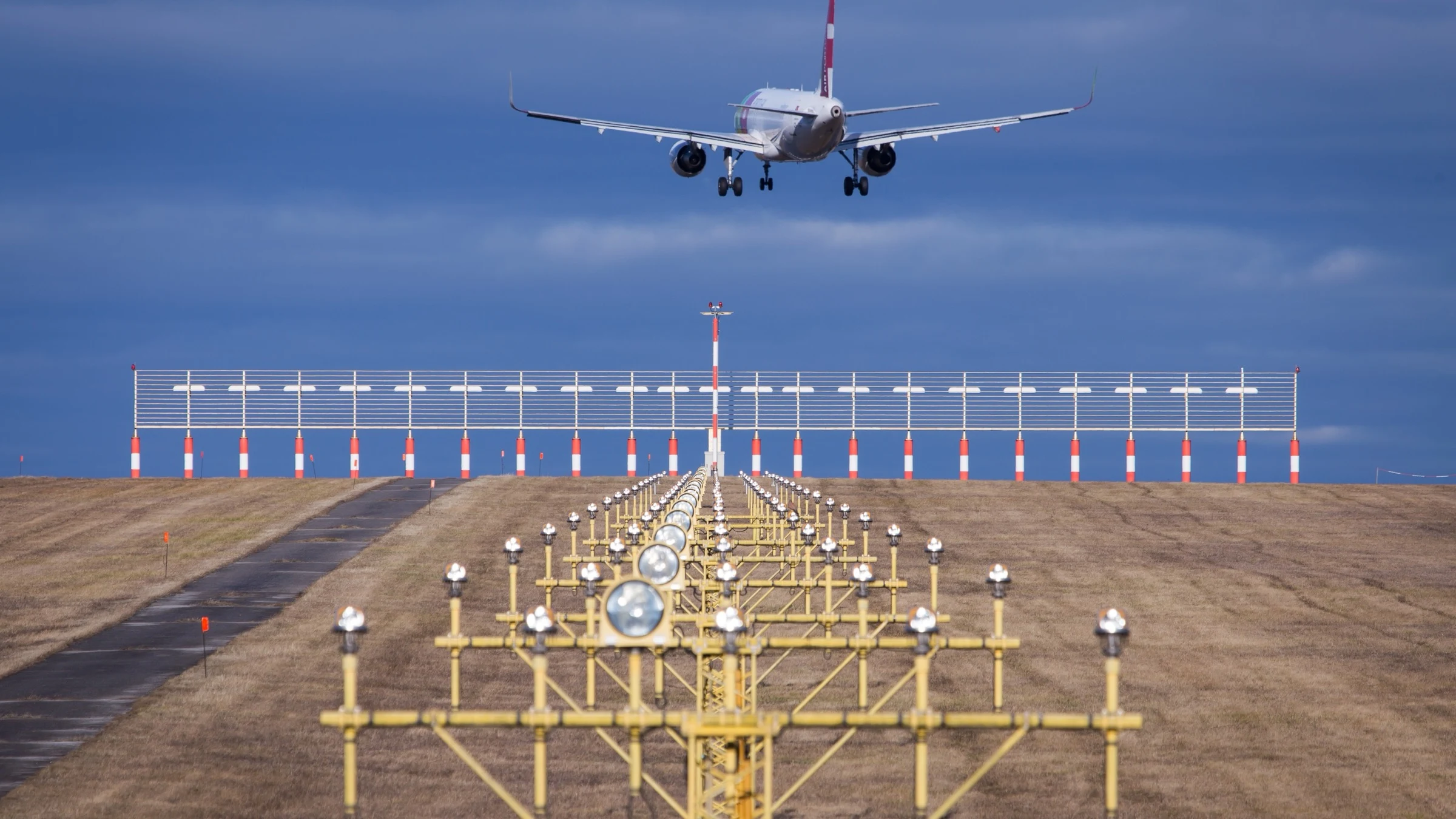
A US$250 million program will renew Guatemala's airports, safety equipment and climate resilience while strengthening the regulator, workforce and financial model needed to keep those assets operational.
The World Bank has approved US$250 million for Guatemala’s Civil Aviation Recovery Program. The investment will reach La Aurora International Airport in Guatemala City, Mundo Maya International Airport in Petén, and airfields in Puerto Barrios, Quetzaltenango and Huehuetenango. More than eight million users are expected to benefit.
The visible work is extensive: repaired runways and aprons, climate-resilient drainage, runway lighting, navigation and surveillance equipment, rehabilitated control towers, perimeter security, and new rescue and firefighting facilities and vehicles. Yet the program’s central proposition is that aviation recovery is not a construction package. It is an operating chain.
The project also funds institutional reform, technical capability, financial sustainability and the training, certification and licensing of air-traffic controllers and emergency personnel. Those elements determine whether renewed assets remain safe, compliant and available after contractors leave.
Different airports need different roles
La Aurora is the country’s principal gateway. Its works include drainage informed by hydrological analysis and recent rainfall, control-tower rehabilitation, security equipment, apron repairs, energy-efficiency improvements and rooftop solar. The combination reflects the airport’s problem: capacity and safety must improve without treating extreme rainfall, energy use or security as separate projects.
Mundo Maya has another role. Better runway and approach lighting, tower equipment, rescue capability and perimeter protection are intended not only to improve its own operations but also to make it a credible domestic alternative when weather disrupts La Aurora. That turns redundancy into a network property. A secondary airport is useful during disruption only if aircraft, crews, passengers, ground services and information can actually transfer to it.
The regional airfields extend the question. Upgrading them can connect remote areas to tourism, trade and services, but uniform investment would be a mistake. Each facility needs a defined function, traffic case, safety requirement and maintenance model. A repaired surface without viable operations can become a periodically renewed liability rather than a durable connection.
Safety assets fail as a chain
Airport safety is distributed across equipment, people and procedure. A modern navigation system needs calibrated maintenance and trained users. A fire vehicle needs staffing, drills, spare parts and reliable access across the airfield. A control tower needs power, communications and a current operating picture. Drainage needs inspection and clearing before heavy rain, not only a design standard at completion.
The program’s workforce provisions are therefore physical-infrastructure measures in another form. Training and certification establish whether the assets can be used as intended. Retention matters too. If skilled personnel leave faster than the system can qualify replacements, new equipment may increase technical sophistication without increasing operational reliability.
Procurement should reflect that dependency. Buying equipment at the lowest acquisition price can create expensive maintenance, proprietary support or spare-parts exposure. Whole-life evaluation should include training, software, calibration, consumables, climate conditions, warranty response and the country’s ability to maintain the asset locally.
Financial sustainability is the unglamorous gate
The program is aligned with Guatemala Vuela, a strategic plan that seeks to make the country a regional passenger and cargo hub by 2044. Passenger traffic is projected to exceed 11.2 million by 2040, more than twice the estimated 5.2 million in 2025. Tourism already accounts for about five per cent of gross domestic product and supports more than 500,000 jobs.
Those numbers make the investment case, but they should not become a revenue assumption. Traffic growth can be disrupted by global demand, airline choices, safety perceptions, weather and competing hubs. Fees that fully recover costs may weaken route economics; fees set too low can leave maintenance dependent on irregular budget transfers. The program must identify which services can support themselves, which provide wider national value and how any subsidy will be made predictable and transparent.
Future private participation adds another reason to build clear records now. Investors will need to understand traffic, asset condition, revenue rights, service obligations, environmental liabilities and the division of risk between the state and operator. A public–private partnership cannot repair uncertainty that the public owner has not resolved.
Guatemala’s program will run through 2033. Its strongest outcome would not be a collection of completed works. It would be a national aviation operator and regulator able to show, airport by airport, that assets, people, procedures and finance are ready at the same time.
Take-Out
Track whether infrastructure, certified people, safety procedures, maintenance finance and institutional authority become ready together; an upgraded runway cannot compensate for a weak operating chain.
Questions and answers
What readers should know
- What has the World Bank approved?
- It approved US$250 million for Guatemala’s Civil Aviation Recovery Program, with more than eight million airport users expected to benefit.
- Which airports are included?
- The program covers La Aurora and Mundo Maya international airports and airfields in Puerto Barrios, Quetzaltenango and Huehuetenango.
- What physical work is planned?
- Investments include runways, aprons, drainage, lighting, navigation and surveillance equipment, control towers, perimeter security and rescue and firefighting facilities.
- Why is this more than a construction program?
- The investment also covers institutional reform, technical capability, financial sustainability and the training, certification and licensing needed to operate the assets safely.
- What is the practical measure of success?
- Each airport should be able to show that infrastructure, certified personnel, safety procedures, maintenance funding and institutional authority are ready at the same time.