
Mark and Focus analysis
The Colorado River’s New Rules Turn Consensus Failure Into a Managed Operating Cycle
Read the analysis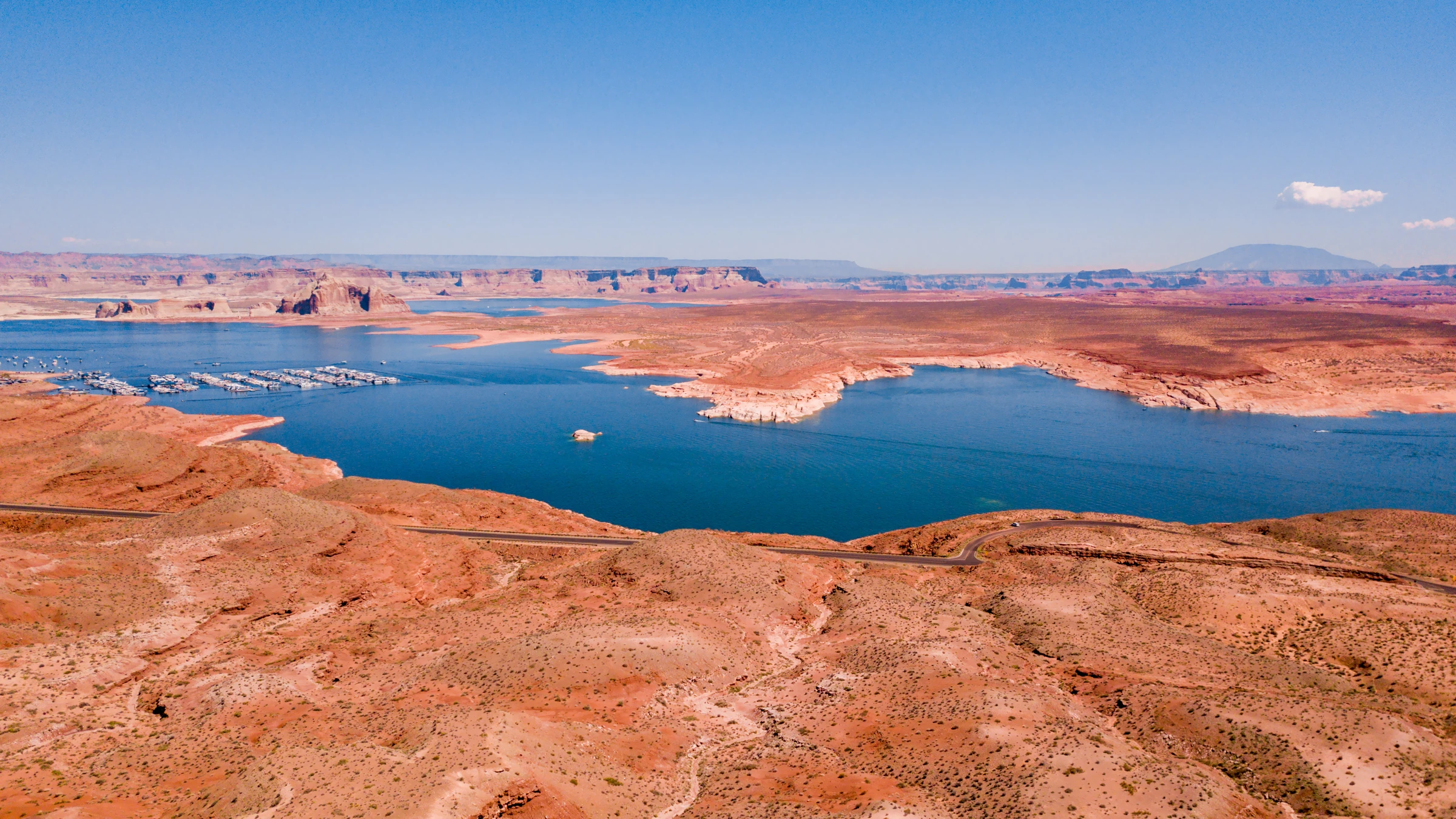
The United States has finalized 2027–2028 Colorado River rules inside a ten-year decision framework, replacing a missing long-term consensus with fixed reductions, reservoir safeguards and repeated opportunities to adjust operations.
The Colorado River has entered its post-2026 operating era without the comprehensive basin-wide agreement that many participants wanted. The Department of the Interior has responded by finalizing rules for 2027 and 2028 inside a ten-year decision framework running through 2036. The result is neither a permanent settlement nor an empty extension. It is a managed operating cycle built for a river whose hydrology and politics can no longer be assumed to move together.
The immediate conditions are severe. The Bureau of Reclamation says combined storage in Lake Powell and Lake Mead is lower than at any time since before Lake Powell began filling in 1963. The winter of 2025–2026 produced the lowest observed snowpack on record, and both reservoirs reached record-low elevations in August 2026. The new rules therefore begin with infrastructure protection rather than an abstract allocation debate.
For water year 2027, Lake Powell is expected to begin between elevations 3,540 and 3,510 feet. Operations will use a lower-elevation protection range, with an expected release of 6.0 to 7.0 million acre-feet. Releases can be adjusted through April in an effort to maintain at least 3,510 feet, the level identified for continued operational reliability at Glen Canyon Dam.
Lake Mead carries a different consequence. Deliveries to the Lower Basin states will be reduced by 1.25 million acre-feet in 2027, with the same total reduction specified for each of the next two years. If the Lower Basin states implement their proposed sharing agreement, Arizona would absorb 760,000 acre-feet, California 440,000 and Nevada 50,000.
Fixed reductions and voluntary action now operate together
The framework combines mandatory operating decisions with space for voluntary action. Lower Basin users are expected to conserve and store at least another 700,000 acre-feet over the two-year period, in addition to the annual 1.25 million acre-foot reductions. Water users can store conserved water in system reservoirs, while elevation triggers initiate coordination if conditions deteriorate.
This hybrid design acknowledges two realities. Federal operators need objective rules now, because reservoir releases and deliveries cannot wait for a political settlement. At the same time, the basin’s states, tribes and water users retain knowledge and authority that cannot be replaced by a single federal formula. Voluntary agreements can improve outcomes if they are specific, measurable and additional to the baseline rules.
The danger is that flexibility becomes opacity. A voluntary conservation commitment can be described in acre-feet but still leave questions about timing, verification, ownership and later recovery. Stored water can protect the system, but accounting rules must show who created it, when it can be released and whether its future use recreates the risk that conservation was meant to reduce.
A two-year rule sits inside a ten-year frame
The most consequential institutional choice is the time structure. The Record of Decision establishes principles, thresholds and operational ranges through 2036. Specific operating guidelines are expected to cover two-year intervals, although a consensus agreement could support a longer period.
This separates strategic boundaries from near-term operating numbers. The decade-long framework supplies continuity: coordinated reservoir operations, infrastructure protection, expanded storage tools and a process for future decisions. The two-year guidelines allow releases and reductions to respond to observed hydrology rather than forecasts made too far in advance.
That design is adaptive, but it can also encourage deferral. If every two-year period is treated as another bridge to a future settlement, difficult allocation questions will recur under worsening conditions. The cycle becomes credible only if each period produces evidence and decisions that narrow uncertainty for the next one.
An accountable cycle would publish the hydrologic basis for releases, the distribution and effect of reductions, the volume and durability of voluntary conservation, the use of storage tools, infrastructure-risk indicators and the consequences for tribes, ecosystems, agriculture and urban systems. It should also identify which disagreements remain political and which have become operationally unavoidable.
Tribal participation cannot remain an offset mechanism
The guidelines include a federally managed pool intended to support tribal firming obligations and provide limited offsets for tribal impacts. This recognizes that thirty Basin Tribes are not peripheral stakeholders. Their rights, infrastructure constraints and unresolved access shape what an equitable operating system can deliver.
Yet a managed pool is not a substitute for full participation in the rules that determine the river’s future. The decision cycle should make tribal water use, infrastructure needs, conservation contributions and decision authority visible without collapsing distinct rights into a single mitigation category. The basin cannot claim consensus while treating tribes primarily as impacts to be offset.
Mexico remains on a separate binational track under the 1944 Water Treaty. That procedural separation is legally important, but hydrologically the river remains one system. The operating record should therefore show how domestic decisions interact with binational deliveries, conservation and ecological commitments without pre-empting the International Boundary and Water Commission process.
The framework should be judged by what it learns
The 2027–2028 guidelines create an operating answer to immediate scarcity. They protect critical dam infrastructure, lower deliveries, create voluntary storage space and establish triggers for further action. Their success will not be demonstrated merely by surviving two years.
The test is whether the framework makes the next decision better. Did objective thresholds reduce surprise? Did conserved water remain in the system long enough to change risk? Were reductions distributed and verified as promised? Did the process expose infrastructure and tribal constraints early enough to act? Did states use the interval to build a more durable agreement?
Consensus failure has not stopped the river from operating. It has changed the governance task. The basin now needs a transparent cycle that can make hard decisions under uncertainty while preserving a route toward wider agreement. Flexibility is valuable only when every adjustment leaves a clearer public record of what the system can sustain.
Take-Out
Treat the two-year guidelines as an accountable operating cycle: publish hydrology, reductions, voluntary storage, tribal effects and reservoir risks before each decision period is reset.
Questions and answers
What readers should know
- What did Interior finalize?
- A Record of Decision for a 2027–2036 framework and specific operating guidelines for 2027 and 2028.
- How large are the Lower Basin reductions?
- The guidelines provide for 1.25 million acre-feet of reduced deliveries in each of the next two years, plus at least 700,000 acre-feet of voluntary conservation and storage over the period.
- Why use two-year guidelines?
- They allow operations to respond to observed hydrology while the ten-year framework preserves common principles and thresholds.
- What is the principal governance risk?
- Flexibility can become deferral or opaque accounting unless every adjustment and conservation action is measured publicly.
- What should happen before the next cycle?
- Publish performance, tribal effects, infrastructure risks and unresolved allocation questions, then use that evidence to set the next operating period.
Stay in the loop
Keep Mark and Focus in view
Hear about future publications, announcements, and relevant updates from Mark and Focus.