
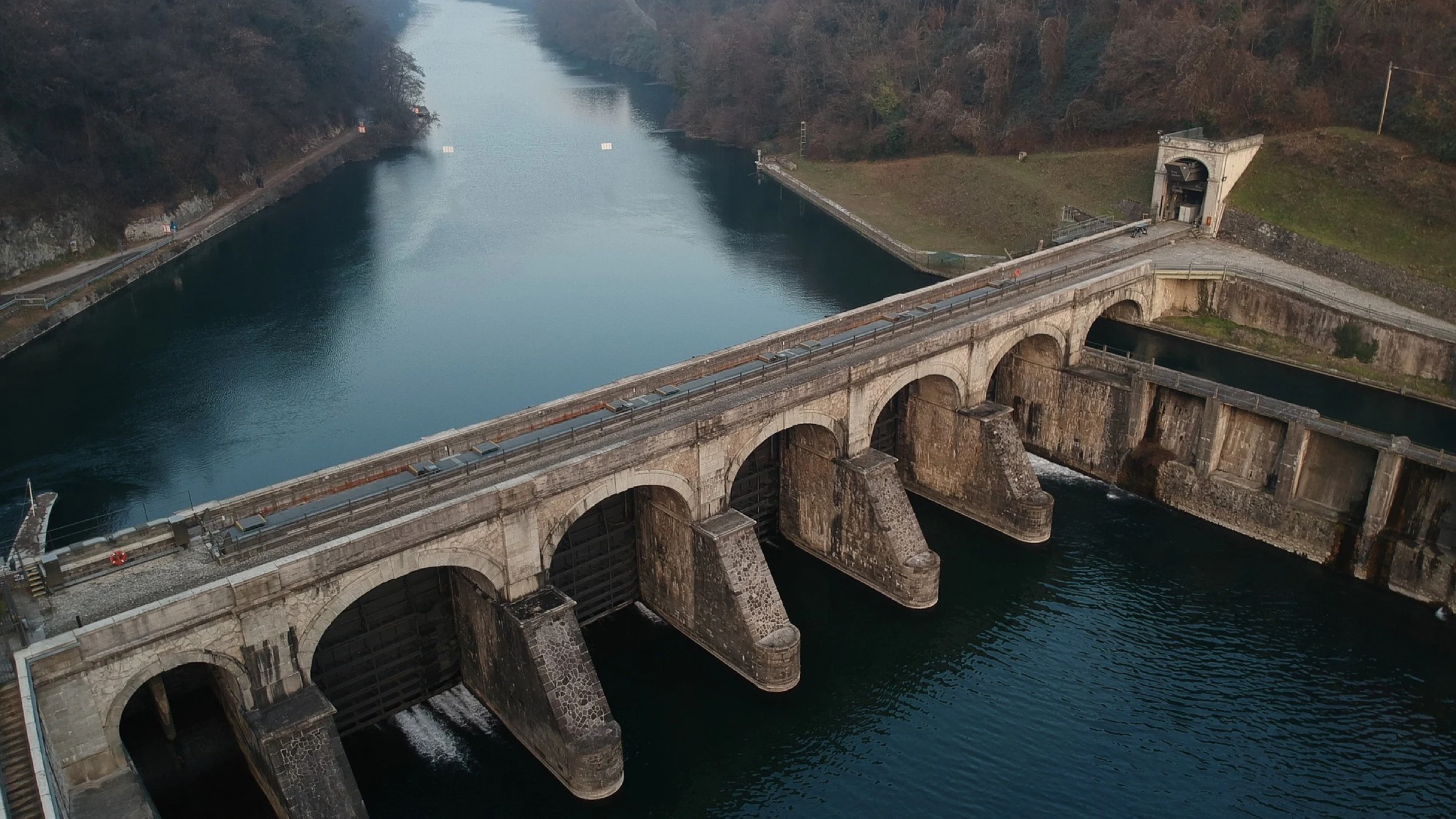
China’s water ministry has reviewed guidance that joins dam safety, river ecology and digital intelligence in one operating model. The test is whether common standards turn those three ambitions into decisions throughout each asset’s life.
China’s Ministry of Water Resources has reviewed guidance for advancing “safe dams, ecological dams and smart dams.” The formulation is concise, but it changes the unit of attention. A dam is no longer treated only as a structure that stores or controls water. It is expected to remain safe through its full life, support the health of the river system and produce enough digital intelligence for operators to anticipate changing conditions.
The ministry’s 23 September meeting placed the three duties inside one program. Safety requirements are to cover the factors that create, carry and control risk. Ecological performance is to include protection and restoration of river systems. Smart operation is to use digital mapping, simulation and forward-looking prediction to strengthen forecasting, warning, rehearsal and response planning.
The three duties have to meet in the control room
The practical value lies in the relationship between those duties. A reservoir release can support power, supply, irrigation or flood control while also changing downstream flow, habitat and sediment conditions. A structural concern can alter the range of safe operating choices. Better forecasts may create room to adjust releases earlier, but only if operators trust the data and have authority to act.
Treating safety, ecology and intelligence as separate projects would preserve the old problem. Structural teams could optimize inspection schedules, environmental teams could track river indicators and digital teams could build models without producing a shared operating decision. The guidance will matter if it defines how evidence moves between those functions.
China has already been developing modern reservoir-management matrices and digital-twin systems. Field work in Yunnan has linked the three-dam concept to lifecycle safety controls, ecological scheduling, integrated monitoring and stronger performance under extreme floods and earthquakes. That experience gives the national guidance an operating base, but it also exposes the need for consistent definitions across a very large and varied asset fleet.
Digital mapping needs a physical evidence chain
A digital representation of dam condition is not self-validating. Sensors need known accuracy, maintenance and calibration. Models need to state which observations they use, how uncertainty is handled and when an operator must override an automated recommendation. Predictions should be tested against actual reservoir behavior rather than judged by the sophistication of the interface.
The ministry’s emphasis on digital mapping, intelligent simulation and forward prediction can improve decisions before an emergency. It can also concentrate risk if poor data, incompatible systems or unclear responsibility create a convincing but incomplete picture. Technical standards should therefore cover data quality, interoperability, cybersecurity, model validation and the custody of decisions as well as hardware.
That custody should reach from the sensor to the accountable official. An operator needs to see when a reading was collected, whether it passed quality checks, which model version used it and who accepted the resulting recommendation. During a flood or earthquake, that record helps teams distinguish current evidence from stale assumptions. After the event, it allows investigators to improve the system without treating the digital model as an unexamined authority.
Ecological performance requires the same discipline. A general commitment to river health should become asset-specific operating limits and indicators: environmental flows, temperature, sediment, fish passage or other measures appropriate to the river. Operators need to know when ecological objectives can be adjusted during drought or flood conditions, who authorizes the change and how recovery is assessed.
Guidance becomes real through auditable operating choices
The September decision is a policy milestone rather than proof of improved dam performance. The next evidence should be a published standards system, implementation timetable, pilot results and comparable reporting from different reservoirs. It should show where safety, ecology and digital intelligence changed a release, inspection, maintenance or emergency decision.
China’s three-part model is strongest when none of the labels can stand alone. Safety sets the boundary, ecology broadens the purpose and intelligence improves the timing and quality of action. The achievement will be visible when those elements produce a better documented operating choice under real pressure.
Take-Out
A smart dam is useful only when its digital model changes inspections, ecological releases and emergency decisions; the technology must serve the safety and river outcomes it is meant to connect.
Questions and answers
What readers should know
- What did the Ministry of Water Resources review?
- Guidance for advancing safe, ecological and smart dams as a combined national operating model.
- What does “safe dam” mean in the reviewed approach?
- Managing risk throughout the asset lifecycle, including the factors that create hazards, bear risk and prevent failure.
- What makes a dam “ecological”?
- Its planning and operation must contribute to protecting and restoring the river ecosystem, not only deliver engineering services.
- What is expected from a “smart dam”?
- Digital mapping, simulation and prediction that improve forecasting, warnings, scenario rehearsal and response planning.
- What would demonstrate implementation?
- Common standards, validated models and documented cases where integrated evidence changed an operating or investment decision.