
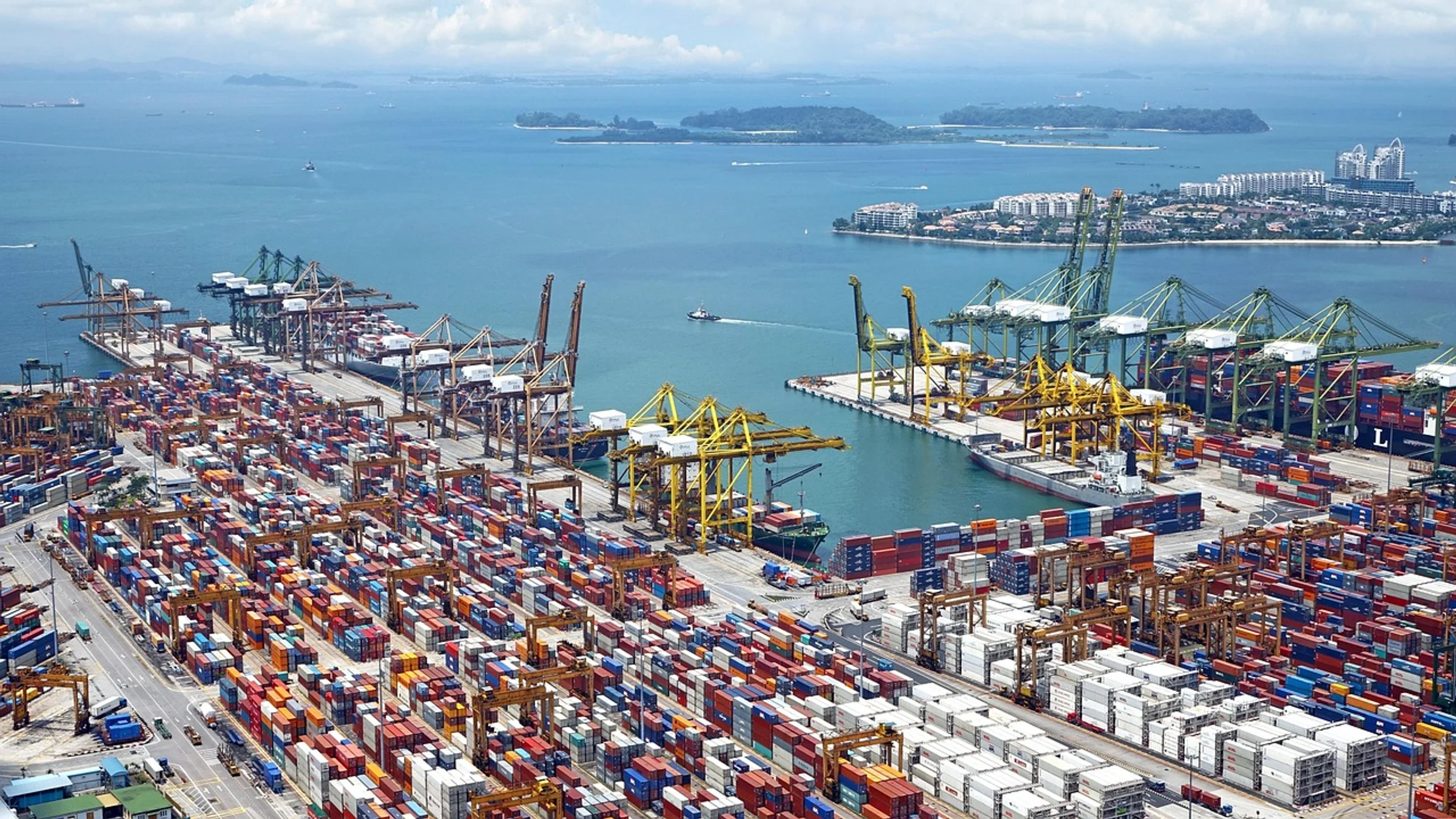
A South Australian simulation platform places port teams inside combined cyberattack and extreme-weather scenarios, shifting resilience work from static plans toward the decisions, communications and coordination required during cascading disruption.
From a risk register to a shared event
Australia has developed a gaming-style simulation platform that allows port operators to practise their response to cyber incidents and severe weather. The project brings together Flinders University, the Defense Science and Technology Group, Adelaide University and PrioriAnalytica, with support from South Australia’s Defense Innovation Partnership.
Its significance lies in the problem it chooses to model. Port resilience is not only a question of whether individual assets have backups or whether a cyber team can detect an intrusion. Ports are dense operational environments where cargo handling, vessel movements, access control, power, communications, safety and external transport links depend on one another. A disruption in one system can alter the decisions required in several others.
Traditional exercises often separate those risks. A cybersecurity drill may focus on containment and recovery. A severe-weather exercise may focus on safety, closure and physical damage. The new platform puts teams into multi-vector scenarios and asks them to coordinate in real time. That brings the interaction between technical systems and human decision-making into view.
Cascades are organizational as well as technical
A cyber incident at a port may begin with compromised operational technology, unreliable data or loss of access to a control system. Its consequences quickly become physical and commercial. Operators may need to slow or stop equipment, change vessel or truck movements, verify information manually and communicate with government, customers and emergency services.
Extreme weather creates a similar chain. High winds, flooding or heat can reduce the safe operating envelope of cranes, yards, power systems and transport connections. If a cyber incident arrives at the same time, teams may lose the digital visibility they normally use to manage the physical emergency.
The hardest decisions sit between functions. Who has authority to stop an operation? Which data can still be trusted? When should a technical fault be treated as a security event? What service should be restored first? Which external organization needs to know, and what can be communicated without spreading uncertainty? Written plans can allocate responsibilities, but only an exercise shows whether people interpret those responsibilities in the same way.
The simulator is designed to make those tensions observable. Participants must communicate, prioritize and act while conditions evolve. That allows organizations to identify weaknesses in procedures and leadership before judging the exercise only by whether a technical system returned to service.
A serious game needs serious evidence
Simulation is valuable because real crises are too dangerous and expensive to use as routine training. It creates repeatable situations, permits controlled variation and allows teams to examine decisions after the event. But realism is not automatic. A polished interface does not guarantee that a scenario captures the timing, dependencies or incentives of actual port operations.
The project therefore needs evidence at three levels. First, the technical model must represent enough of the port environment to create credible consequences. Earlier related work at Flinders has used cyber-twin methods, miniature physical models, simulation and operational data to assess vulnerabilities. Second, scenarios must reflect how ports, emergency bodies and security organizations actually divide authority. Third, the exercise must produce measurable learning: faster recognition, clearer escalation, fewer contradictory decisions or stronger recovery sequencing.
Without those measures, participants may enjoy an exercise and still return to unchanged procedures. The strongest use of the platform would be iterative. A scenario exposes a weakness; an organization changes a plan, control or interface; and a later exercise tests whether the change improves performance.
Resilience is a team capability
Australia’s dependence on maritime trade raises the stakes. Ports are not interchangeable in the short term, and interruption can move through national supply chains. Yet the project also has relevance beyond ports. Defense precincts, hospitals and emergency-management organizations face the same underlying problem: technical systems, physical operations and institutional responsibilities collide during a disruption.
Transfer will require more than changing the labels in a scenario. Each sector has different safety rules, service priorities and authority structures. The reusable element is the method—modeling a connected operational environment and observing how teams act inside it—not a single universal script.
The project remains a capability demonstration rather than proof of national deployment or improved incident outcomes. Stronger evidence would show which port operators have used it, what kinds of weakness were found, how procedures changed and whether repeat exercises improved decisions. Expansion should follow demonstrated learning, not the novelty of the interface.
The deeper lesson is that resilience does not reside in equipment alone. It is produced by people who can recognize a changing situation, share a reliable picture and make coordinated trade-offs. Australia’s simulator gives that collective capability somewhere to be tested.
Take-Out
A crisis plan becomes useful only when teams can make decisions together under pressure. Simulation exposes the gaps between technical controls, organizational procedures and human behavior before a real port disruption does.
Questions and answers
What readers should know
- What has been developed?
- A gaming-style simulation platform for port teams to practise responses to cyber incidents and extreme-weather disruption.
- Why combine cyber and weather scenarios?
- Both can affect power, communications, operational technology, safety and logistics, and their interaction can produce cascading consequences.
- What does the platform test beyond technology?
- Leadership, communication, authority, prioritization and coordination between organizations under pressure.
- Who developed the project?
- Flinders University, the Defense Science and Technology Group, Adelaide University and PrioriAnalytica, with Defense Innovation Partnership support.
- What evidence is needed next?
- Operational adoption, documented procedure changes, repeat-exercise results and proof that learning transfers beyond a demonstration setting.