
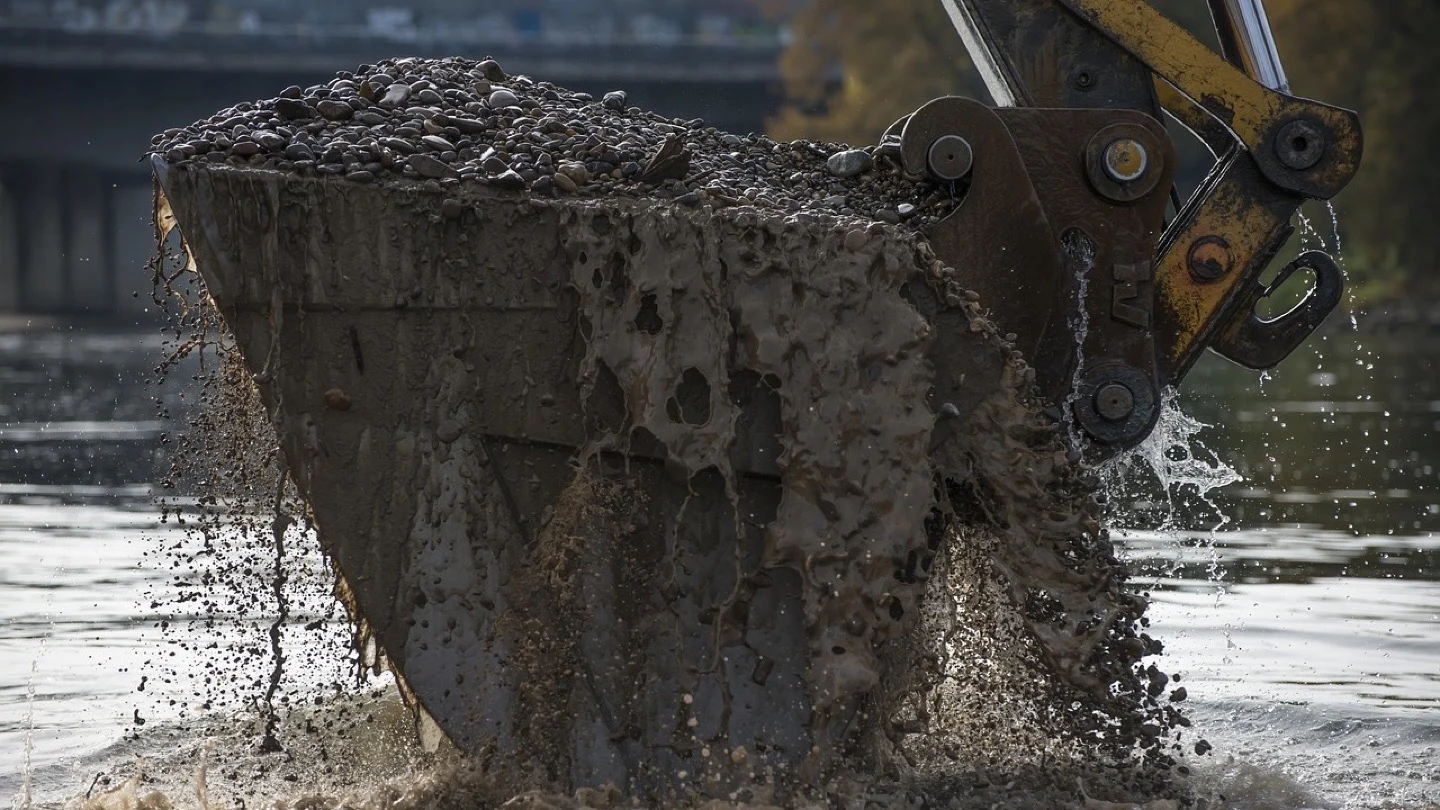
A Swiss-engineered mobile dewatering plant is being trialed at a Wairau Valley stormwater pond. Auckland Council says the technology could reduce pond sediment sent to landfill by 60 percent, but the figure remains prospective. The trial’s significance will depend on measured diversion, verified destinations for treated material and a process that can be repeated across Auckland’s 650 ponds.
Auckland Council is testing whether sediment from routine stormwater maintenance can be treated with less reliance on landfill. A Swiss-engineered mobile dewatering plant is being trialed at a stormwater pond in Wairau Valley, placing the equipment within an existing maintenance process rather than treating it as a separate demonstration.
The trial addresses an ongoing material flow rather than a one-time cleanup. Its immediate evidence will concern the sediment treated at one site and the material’s subsequent destination. Any broader conclusion will depend on whether the process proves repeatable across Auckland’s pond network under normal operating conditions.
Managing a Recurring Sediment Stream
Auckland’s 650 stormwater ponds retain sediment that might otherwise reach waterways. Maintaining that water-quality function requires the accumulated material to be removed and handled. Around 14,000 cubic meters of sediment is taken from the ponds annually.
Approximately 2.2 million cubic meters is expected to require removal over the next 20 years. The annual figure and the 20-year estimate cover different time horizons and should not be treated as a single forecast. Together, they show why the process must work repeatedly within routine maintenance if it is to change the material pathway at a useful scale.
Testing Mobile Dewatering in Wairau Valley
The mobile plant dewaters sediment after it has been removed from a pond and before its final disposition. Its mobility is operationally relevant because the material arises across 650 ponds rather than at one fixed facility. The Wairau Valley trial is testing whether the equipment can occupy a practical place between sediment recovery and final handling without disrupting the ponds’ primary purpose.
Auckland Council says the plant could reduce stormwater-pond sediment sent to landfill by 60 percent. This figure expresses potential, not a measured result from the network. It defines the proposition being tested: if dewatering works under Auckland’s operating conditions, a greater share of recovered sediment may follow a route other than landfill.
Turning Treatment Into Verified Diversion
Equipment activity does not by itself establish a different material outcome. The stated 60 percent potential becomes credible only if the trial records how much sediment the plant treats, identifies the basis for calculating the diverted share and follows the treated material to its final destination.
That destination record is essential because treatment alone does not close a resource loop. A reported reduction must represent an avoided landfill flow rather than a temporary transfer before later disposal. Connecting treated volume, final disposition and pond location would allow maintenance events at different sites to be assessed on the same basis.
Responsibilities Across the Pond Network
If the process is adopted, maintenance teams would move from deciding only where recovered sediment should be disposed of to determining how each load should be treated before its final destination is settled. Material recovery would become a control point within routine pond maintenance rather than a separate environmental objective.
The underlying maintenance obligation would remain. The ponds would still retain sediment to protect waterways, crews would still remove the accumulated material, and the council would still need records showing where it went. The operational change would be an added treatment decision between removal and final handling.
As the mobile plant moves between sites, the council would need comparable operating records. Consistent information would show whether the process handles recurring volumes and performs across multiple maintenance settings while keeping individual site results distinct from system-wide performance.
What the Trial Can Demonstrate
A successful treatment run at Wairau Valley would provide evidence from one pond. It could not automatically be projected across every site or every year covered by the long-term estimate. Comparable records from additional maintenance events would be needed to determine whether the process performs consistently across the network.
The current evidence therefore supports a prospective conclusion. Mobile dewatering may reduce Auckland’s dependence on landfill, but its value will be established only when operating records show verified, repeatable diversion across multiple sites. Equipment activity at a single trial location is not enough to demonstrate a network result.
Take-Out
Auckland should judge the mobile plant by verified, repeatable landfill diversion across its pond network, not by equipment activity at one trial site.
Questions and answers
What readers should know
- What stormwater sediment technology is Auckland Council trialing?
- Auckland Council is trialing a Swiss-engineered mobile dewatering plant at a Wairau Valley stormwater pond.
- How large is the Auckland Council stormwater sediment network?
- Auckland's stormwater system includes 650 stormwater ponds.
- How much stormwater sediment does Auckland Council remove annually?
- Around 14,000 cubic metres of sediment is removed from the ponds annually.
- What long-term stormwater sediment volume does Auckland Council expect?
- Approximately 2.2 million cubic metres is expected to require removal over the next 20 years.
- What landfill reduction does Auckland Council associate with stormwater sediment treatment?
- The council says the trial could reduce stormwater-pond sediment sent to landfill by 60 percent.
Stay in the loop
Keep Mark and Focus in view
Hear about future publications, announcements, and relevant updates from Mark and Focus.