
Mark and Focus analysis
Auckland Puts Stormwater Sediment Through an Operating Test
Auckland Council is putting a mobile dewatering plant against a recurring stormwater-maintenance stream: around 14,000 cubic metres of sediment annually and approximately 2.2 million cubic metres over 20 years. The trial's circular test is whether the stated 60 percent landfill-reduction potential becomes measured, repeatable diversion.
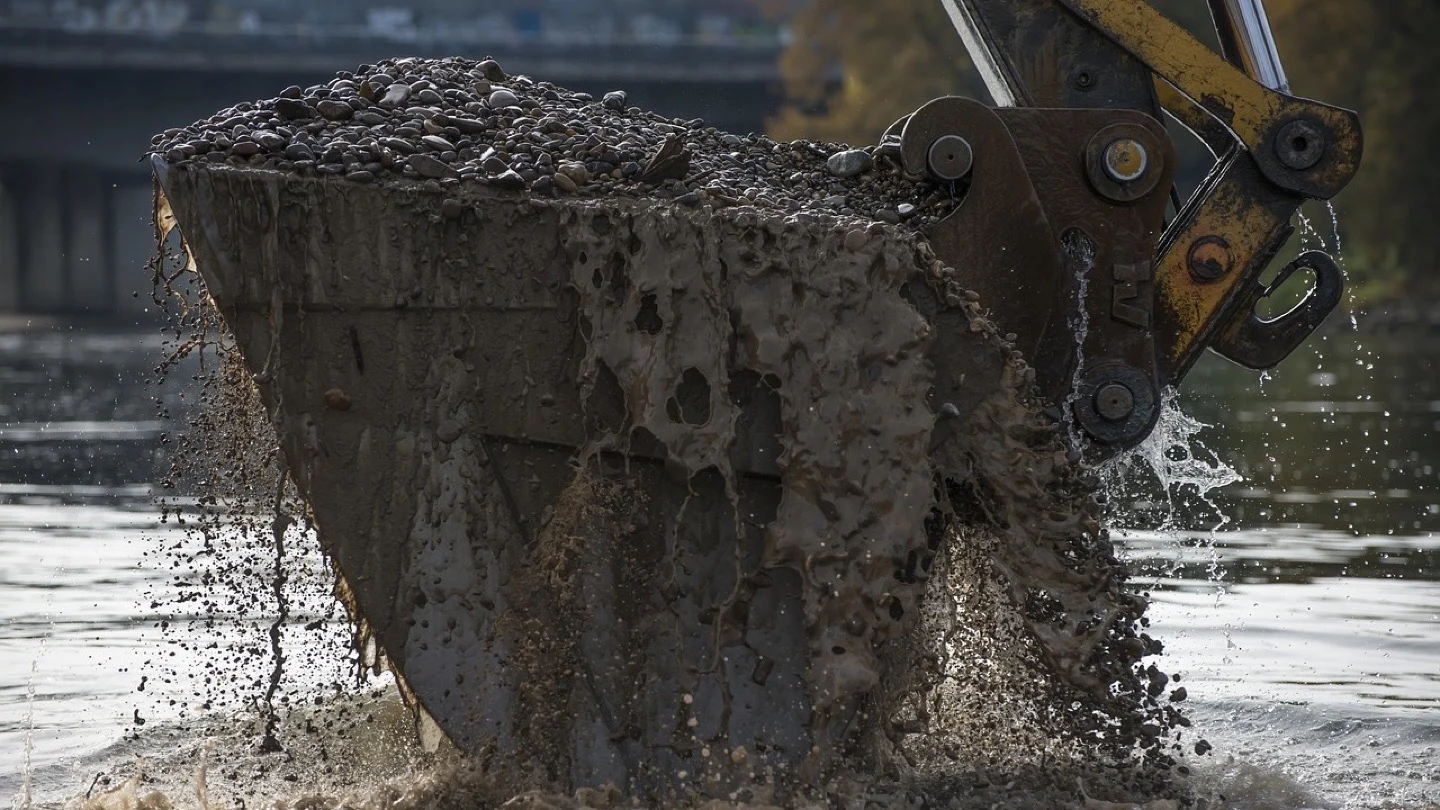
Auckland Council is putting a mobile dewatering plant against a recurring stormwater-maintenance stream: around 14,000 cubic metres of sediment annually and approximately 2.2 million cubic metres over 20 years. The trial's circular test is whether the stated 60 percent landfill-reduction potential becomes measured, repeatable diversion.
Auckland’s mobile sediment trial places a recurring stormwater waste stream inside an operating test. The trial places a circular-economy test inside routine drainage maintenance: whether sediment that is now handled as a disposal burden can be separated and managed with less landfill dependence. The trial matters because Auckland’s pond network creates a recurring material flow, not a one-time cleanup. This makes the test operationally bounded: the evidence supports sediment treatment and prospective diversion, while broader claims depend on results that the trial has not yet supplied. The resulting records must keep the treated volume, final disposition, and network location connected. The question is system-wide.
Operational Context
Auckland’s 650 stormwater ponds perform a water-quality function, but that function produces a maintenance stream that must be removed and handled. Around 14,000 cubic metres of sediment is taken from the ponds annually. The operating problem therefore sits between two systems: ponds must retain sediment to protect waterways, while maintenance crews need a viable destination for the material they recover. The annual figure is therefore both a maintenance measure and the clearest available baseline for judging whether treatment changes the material pathway at useful scale. Taken together, the annual maintenance stream and the longer-term removal outlook make repeatability the central design issue. The mobile plant has to fit the sequence already used to remove sediment, and the treated material needs a recorded destination. Those controls connect a technical process at one pond to a potential operating model across the network without turning the council’s stated potential into an achieved result.
The future volume makes that interface material. Approximately 2.2 million cubic metres of sediment is expected to require removal over the next 20 years. If the existing disposal pathway continues unchanged, pond maintenance repeatedly transfers captured material into a landfill demand. Circular performance has to be assessed at that handoff, where a water-quality asset creates an ongoing resource-management obligation. The 20-year estimate also makes persistence central: a process that works intermittently would leave most of the forecast stream dependent on the existing handling route.
How It Works
The Swiss-engineered mobile dewatering plant is being tested at a pond in Wairau Valley. Mobility matters operationally because the sediment arises across a network of 650 ponds, while dewatering addresses the condition in which the material leaves each maintenance site. The trial is therefore testing a process that can sit between removal and final handling rather than changing the ponds’ primary function. This position in the workflow matters because useful adoption must fit the sequence crews already use to preserve pond performance across the network.
The council says the plant could reduce stormwater-pond sediment sent to landfill by 60 percent. That is a prospective performance figure, not a measured system-wide result. It establishes the trial’s material-flow hypothesis: a greater share of the removed sediment may follow a route other than landfill if treatment works under Auckland’s operating conditions. A credible result must retain the qualification attached to that figure and show the measured denominator against which the diverted share is calculated.
The relevant baseline is the annual removal of around 14,000 cubic metres, considered alongside the approximately 2.2 million cubic metres expected over 20 years. These figures describe different horizons and should not be collapsed into one forecast. Together, they show why a repeatable treatment method matters more than a single successful demonstration at Wairau Valley. Long-horizon relevance will come from consistent operating records, not from projecting one site result automatically across every pond or year in the estimate.
Governance Implications
The first implementation condition is measured yield. Auckland Council needs to distinguish sediment processed from sediment actually diverted from landfill, because equipment activity does not by itself close a resource loop. The stated 60 percent potential becomes credible only when the trial records the disposition of treated material and shows that the pathway can be repeated beyond the initial pond. The disposition record should follow the material beyond the plant. A reported reduction must clearly represent an avoided landfill flow rather than a temporary transfer.
The second condition is network fit. A mobile plant must support maintenance across 650 ponds while the system continues removing around 14,000 cubic metres each year. That requires operational evidence about where treatment occurs in the maintenance sequence and whether the process can handle recurring volumes. Without that fit, a technically successful trial could remain separate from everyday pond management. Network fit also includes repeatability: the same evidence categories should be available when treatment moves between sites, allowing results to be compared without changing the test.
What Changes
Operators would move from asking where recovered sediment goes to deciding how each load is treated during disposition. That change brings material recovery into day-to-day stormwater maintenance rather than leaving it as a separate environmental ambition.
Crews still need records showing that treated sediment follows a different route. Equipment activity alone does not establish circular performance, and an isolated trial cannot show that the process fits routine pond work.
The operational consequence is a new control point between removal and final handling. Auckland can claim progress when operating practice consistently separates treatment from disposal and records the resulting destination of recovered material.
Take-Out
Auckland should judge the mobile plant by repeatable landfill diversion across its pond network, not by equipment activity at one trial site.