
New York City (NYC) has set itself an ambitious goal of reducing its greenhouse gas emissions (GHG) by 80% below 2005-levels by 2050 (80×50). To achieve the target NYC is focusing on reducing GHG emissions in four main sectors: Building, energy supply, transportation and solid waste.
The transportation sector, which includes private vehicles, freight and mass transit (subway, commuter rail and bus), is responsible for 11.4 million tons of GHG emissions, or 24% of the city’s total emissions.
NYC cutting back emissions in the transportation sector
With the NYC municipal government fleet of more than 29,000 vehicles contributing 4% of total emissions the City of New York has implemented the NYC Clean Fleet program to reduce its own GHG emissions as well as encourage the private sector’s transition towards a low-carbon transportation future.
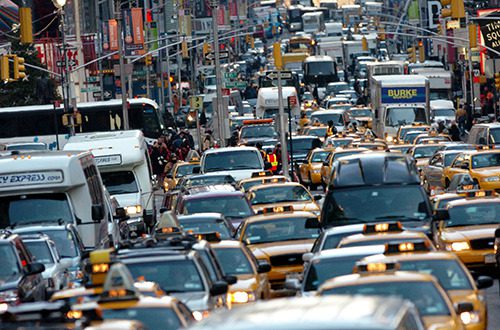
[clickandtweet handle=”” hashtag=”” related=”” layout=”” position=””]The NYC Clean Fleet program aims to achieve a 50% reduction in GHG emissions[/clickandtweet] below 2005 levels by 2025 and an 80% reduction by 2035. This will be achieved by moving towards cleaner fuel technologies including biofuels, hydrogen, natural gas and electricity as well as modifying driver behavior. Specifically, the NYC Clean Fleet strategy will see NYC:
- Adding 2,000 electric vehicles (EV) to its municipal fleet by 2025, giving NYC the largest EV fleet of any city in the U.S.
- Use biodiesel in the city’s medium-heavy vehicles
- Implement a procurement plan that favors fuel-efficient hybrid sedans
- Train drivers on ‘ecodriving’ e.g. accelerating/decelerating slowly
The take-out
City governments can lead by example when pursuing ambitious emission reduction goals by improving the sustainability of their own operations.
*Robert C. Brears is the author of Urban Water Security (Wiley). Urban Water Security argues that, with climate change and rapid urbanization, cities need to transition from supply-side to demand-side management to achieve urban water security.
Facebook: UrbanH20


